2026-07-22
Gangnam-gu Office Station Hair Loss Review: If Your Hairstyle Keeps Falling Flat, Suspect Hair Miniaturization.
If your hairstyle keeps falling flat, you might be experiencing hair miniaturization. Learn about this early sign of hair loss and how treatments like follicular injections can help.
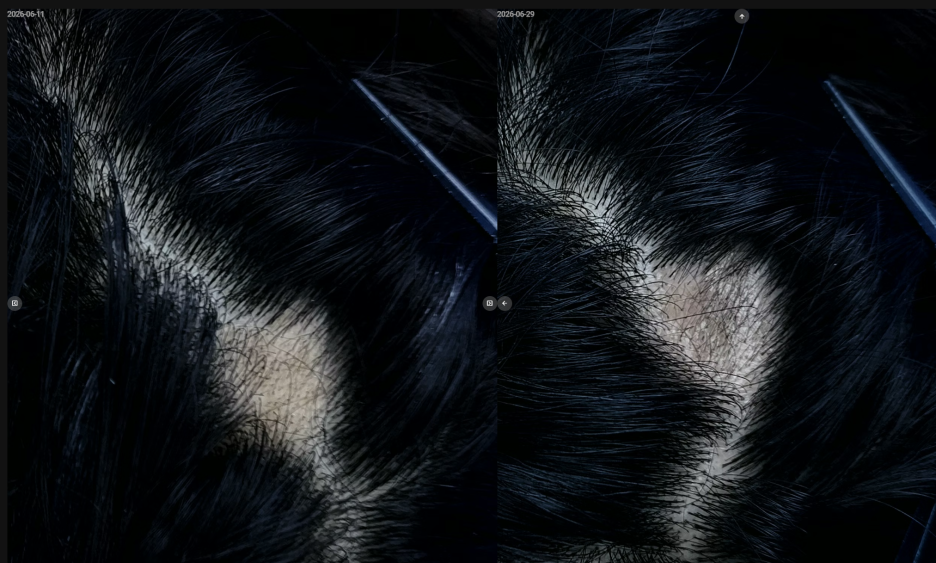
Gangnam-gu Office Station Hair Loss Review: If Your Hairstyle Keeps Falling Flat, Suspect Hair Miniaturization.
Hello.
I am Kim Da-jeong, the head director of Cordia Clinic.

[Premium Hair Loss Treatment] Kim Da-jeong, Head Director, Cordia Clinic | ||
<1:1 Customized Diagnosis> Based on tens of thousands of clinical data, Precise focus and surgical skills perfected through surgical training | ||
Accurate analysis based on 3D AFS precise diagnosis <Precise Diagnostic System> | ||
Sustainable hair loss treatment completed with a low-pain system <Pain Control Know-how> |
‘Even with styling, my hair doesn’t hold volume like it used to, and it falls flat quickly, so I ended up going to the salon frequently.’
Recently, a patient came to the clinic telling me this story.
At first, they thought it was just a salon issue, but one day they suddenly realized that the cause wasn't the styling, but rather their hair itself was becoming thinner.
Worried that it might be the start of hair loss, they came to our clinic for hair loss treatment near Gangnam-gu Office Station.
Behind this subtle change, where your style isn't what it used to be, lies a process called hair miniaturization.
Today, I’d like to explain what hair miniaturization is and why follicular injections can be helpful at this stage.
<Treatment Philosophy>
What is hair miniaturization?
Our hair is broadly divided into two types.
Terminal hairs, which are thick and dark and cover the scalp, and vellus hairs, which are short, thin, and not easily noticeable.
In a healthy scalp, terminal hairs make up most of the hair, but when androgenetic alopecia begins, this balance gradually breaks down.
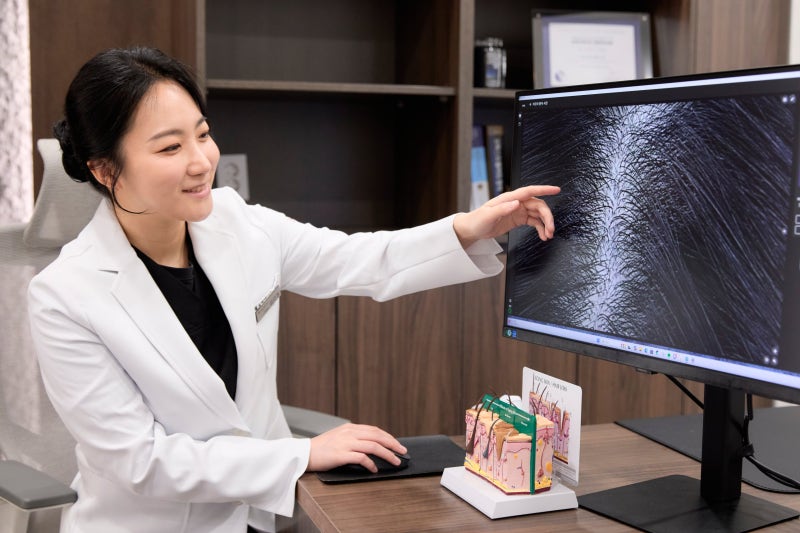
The key culprit is a hormone called DHT.
Testosterone converts to DHT when it meets 5-alpha reductase, and this DHT attaches to hair follicles, shortening their growth phase and gradually shrinking them.
This phenomenon is called follicular miniaturization, and as a result, thick terminal hairs gradually transform into thin, short vellus hairs.

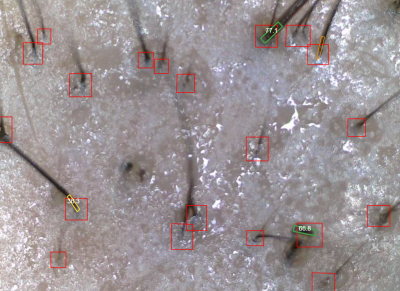
As with the patient I introduced earlier, the feeling that styling doesn’t hold well and volume is lost is a typical early sign that this miniaturization is progressing.
If your part appears wider or if short, thin hairs are frequently observed on your forehead or crown, these are also areas we check first in hair loss consultations at Gangnam-gu Office Station.
Honestly, there’s a point of no return.
The scary thing about hair miniaturization is that it’s easy to miss because of its slow progression.
It doesn’t happen suddenly with a clump of hair falling out today, but rather progresses quietly over several years.
Then, at some point, many people are surprised when they see a photo and think, ‘Has it changed this much?’
The problem is that if miniaturization persists for a long time, the hair follicles eventually lose their function, and new hair no longer grows in that spot.
Since completely lost hair follicles are difficult to revive, it’s no exaggeration to say that the success of management depends on how early intervention occurs.
The stage where hair thins is when the hair follicles are still alive and responsive.
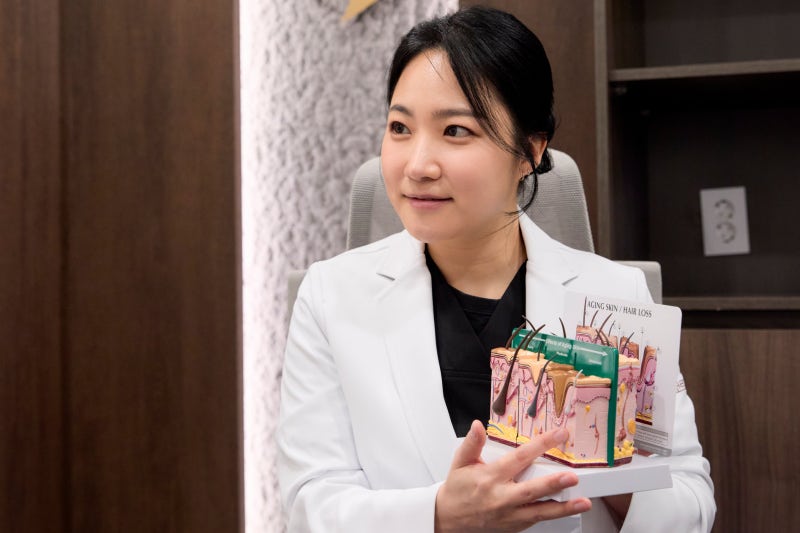
At this stage, improving the scalp environment and consistently providing necessary stimulation can help slow down the rate of miniaturization.
That’s why when you’re considering hair loss treatment near Gangnam-gu Office Station and ask, ‘It doesn’t seem severe yet, should I still go?’, I tell you that now might actually be the best time.
What role does hair loss treatment at Gangnam-gu Office Station play for thinning hair?
Follicular injection is a procedure that directly delivers growth factors and nutrients to the dermal layer of the scalp to improve the surrounding environment.
While oral medications work throughout the entire body, injections differ in their approach by directly supplying the necessary ingredients to the required area.
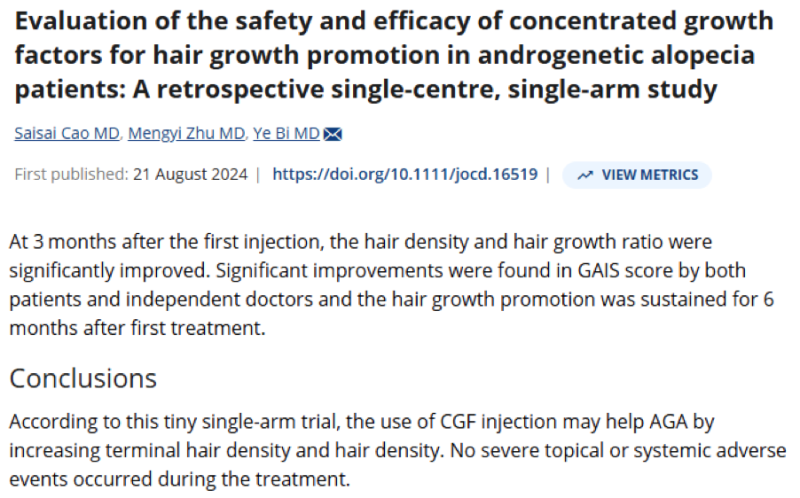
Related research is also accumulating.
It has been reported that when concentrated growth factor (CGF) injections were administered to patients with androgenetic alopecia 3 times at 3-4 week intervals, hair density and growth rate significantly improved 3 months after the first injection, and the effect was maintained for up to 6 months.
Notably, the increase in terminal hair density suggests the possibility that thinning hair can change back to a thicker form.
This is why we recommend injections to those whose hair has started thinning during hair loss consultations at Gangnam-gu Office Station.
It’s an approach to tidy up the scalp environment at a stage where hair follicles still have the potential to respond.
While hair miniaturization progresses quietly, there is definitely a point of no return, and the earlier you respond, the wider your range of options becomes.
If you’ve been consistently bothered by the feeling of thinning hair recently, I recommend checking your scalp condition through a hair loss consultation.
I will personally guide you to the most appropriate direction at this stage.
This has been Kim Da-jeong, the head director of Cordia Clinic.
Thank you.
< Helpful articles to read together >
<Inquiries - Naver TalkTalk>
<Cordia Clinic Announcements> | ||
Cordia Clinic operates on a 100% reservation system to provide sufficient consultation and customized treatment for each individual. Due to limited reservations to ensure the quality of treatment and a private clinical environment, it may be difficult to book an appointment for your desired schedule. We ask for your understanding in advance. We will repay you with accurate diagnosis and sincere treatment. Thank you. |
<Operating Hours> | ||
Mon · Tue · Thu · Fri : 11:00 ~ 20:00 (Lunch break : 14:00 ~ 15:00) Saturday : 10:00 ~ 16:00 (No lunch break) | ||
6th Floor, KR Tower, 429 Seolleung-ro, Gangnam-gu (Seolleung Station Exit 3) | ||
02-568-8575 |
Frequently Asked Questions
What is hair miniaturization?
Hair miniaturization is a phenomenon that occurs with the onset of androgenetic alopecia, where healthy terminal hairs gradually transform into thinner, shorter vellus hairs due to the influence of the DHT hormone. It results from follicular miniaturization and can manifest as early signs like diminished hair volume and difficulty styling.
Why is hair miniaturization dangerous?
Hair miniaturization is dangerous because it progresses slowly and is difficult to notice. If hair follicles miniaturize and lose their function, new hair will no longer grow. Since completely lost hair follicles are difficult to revive, early intervention is crucial.
How do follicular injections help with hair miniaturization?
Follicular injection is a procedure that directly delivers growth factors and nutrients to the dermal layer of the scalp to improve the surrounding environment. This can help slow down the rate of follicular miniaturization and suggests the possibility that thinning hair can change back to a thicker form.
How long do follicular injection treatment effects last?
According to relevant research, when concentrated growth factor (CGF) injections were administered 3 times at 3-4 week intervals, hair density and growth rate significantly improved 3 months after the first injection, and the effect was maintained for up to 6 months.
Should I seek hair loss treatment even in the early stages of thinning hair?
Yes, now might actually be the best time. The stage where hair thins is when the hair follicles are still alive and responsive, so improving the scalp environment and providing necessary stimulation at this stage can help slow down the rate of miniaturization.
How is hair loss treatment conducted at Cordia Clinic?
At Cordia Clinic, we provide 1:1 customized diagnoses based on tens of thousands of clinical data, and offer accurate analysis through our 3D AFS precise diagnostic system. We also aim for sustainable hair loss treatment with a low-pain system and pain control expertise.