2026-10-27
Scalp Botox for Hair Loss in Yeoksam-dong: Side Effects, Pre-Injection Checklist, and Hair Improvement Effects
Scalp botox is being studied as an adjunct for pattern hair loss, with meta-analyses reporting gains in hair density. Here are its side effects, key precautions, and pre-treatment checks.
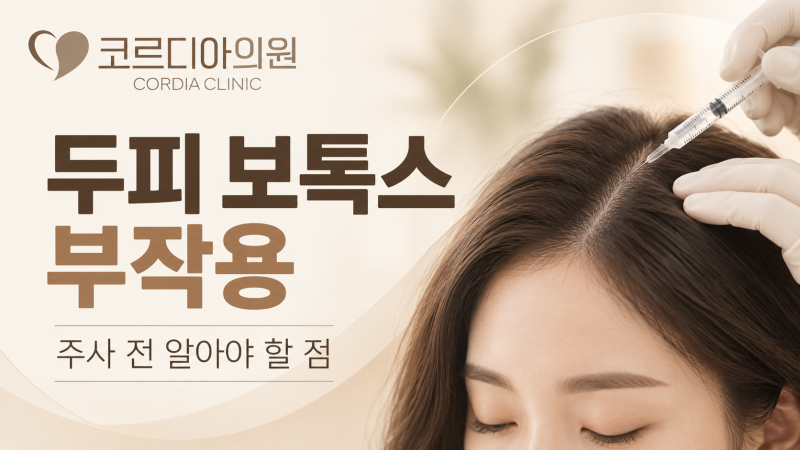
Hello, I'm Dajeong Kim, director of Cordia Clinic.
While researching hair loss treatments, you may come across a procedure called "scalp botox."
Botox is well known as a wrinkle-reduction treatment, but recently it has also been studied as an adjunctive therapy for male and female pattern hair loss.
Clinical studies have reported improvements in hair count and thickness, which has drawn growing interest.
But is it safe to inject botox into the scalp? What side effects might occur?
Today, we'll look at the hair loss benefits and side effects of scalp botox, as well as what to check before treatment.
1. How Can Scalp Botox Help With Hair Loss?
Botulinum toxin is a drug that inhibits the release of acetylcholine at nerve endings.
It is well known for regulating muscle contraction, but several mechanisms through which it may influence hair growth in the scalp are being studied.
Proposed mechanisms include relaxation of the muscles around the scalp, changes in local blood flow, and effects on the environment surrounding the hair follicles.
These effects may create an environment more favorable for hair growth.
However, it is not yet clear whether improved blood flow alone can explain the hair-growth effect, and the exact mechanism requires further research.
2. Has Clinical Research Confirmed the Effects?
A systematic review and meta-analysis published in Dermatologic Surgery in 2025 analyzed eight studies on botulinum toxin for male and female pattern hair loss.
The results showed a statistically significant increase in hair count in the botulinum toxin groups compared with control groups.
Another meta-analysis published in 2026 reviewed seven studies and found that hair density increased by an average of about 24.5 hairs/cm² before and after treatment.
This suggests that botulinum toxin may affect hair growth indicators, not just relax the muscles of the scalp.
However, some randomized controlled trials did not find a significant difference, and not all before-and-after changes can be attributed to the drug itself.
For now, scalp botox is considered a promising adjunctive treatment, not an established replacement for standard hair loss medications.
3. What Are the Side Effects of Scalp Botox?
① Pain and Bruising at the Injection Site
The scalp has a rich supply of blood vessels and sensory nerves.
As a result, injections may cause stinging or pressure, and small bruises, redness, or swelling can also occur.
These reactions are usually temporary, but if pain becomes severe or swelling persists, you should have a healthcare provider check it.
② Headache and Scalp Discomfort
Some patients may experience a headache or a tight feeling in the scalp after treatment.
These symptoms may be related to irritation from the injection itself or to a reaction in the surrounding tissue.
Previous scalp botox studies have mostly reported mild adverse events, but the level of discomfort may vary from person to person.
③ Effects on Nearby Muscles
Because botulinum toxin acts on signaling between nerves and muscles, the injection site and dose are important.
Especially around the forehead and temples, if the drug affects unintended muscles, temporary changes in facial expression or a drooping eyebrow may occur.
That is why it is important to consider the anatomy of the scalp and the injection depth.
4. What to Check Before Scalp Botox
Botulinum toxin has been used across a range of medical fields for a long time, but it is not suitable for everyone.
In particular, if you have a neuromuscular disorder such as myasthenia gravis, or have had an allergic reaction to botulinum toxin in the past, be sure to tell your healthcare provider.
If you are pregnant or planning a pregnancy, careful consideration is needed, since sufficient safety data are lacking.
Some antibiotics and muscle relaxants can also interact with botulinum toxin, so be sure to review all medications you are currently taking.
In rare cases, serious symptoms such as generalized muscle weakness, difficulty swallowing, or difficulty breathing can occur. If they do, seek emergency medical care immediately.
Scalp botox used to treat hair loss may generally be considered off-label use. For that reason, it is important to check each product's approved indications and get a thorough explanation before treatment.
5. Scalp Botox: Choosing the Right Patient Matters Most
Scalp botox is a treatment in which clinical studies have observed possible improvements in hair density and thickness.
It may be considered as an adjunctive option, especially for patients with pattern hair loss who still have some thinned hair remaining.
However, results can vary depending on the cause and progression of hair loss, and not every patient will see the same outcome.
Therefore, it is best to assess your hair condition through scalp dermoscopy and other exams, and, where appropriate, decide on a treatment plan alongside existing medications.
Scalp botox is a treatment that is still being studied for its potential to improve hair loss. The key is not to worry excessively about side effects or to overestimate its benefits, but to thoroughly check whether it suits your own hair loss condition.
References
Cheng F, et al. (2025). Effects and Safety of Botulinum Toxin Injection in Treatment of Androgenetic Alopecia: A Meta-analysis and Systematic Review. Dermatologic Surgery.
Weng H, et al. (2026). The Efficacy of Botulinum Toxin in the Treatment of Androgenetic Alopecia: A Meta-Analysis. Dermatologic Therapy.
Botulinum Toxin in the Treatment of Hair and Scalp Disorders: Current Evidence and Clinical Applications. 2025.
U.S. FDA. BOTOX (onabotulinumtoxinA) Prescribing Information.
※ This article is intended to provide general medical information only. Treatment outcomes and side effects may vary depending on individual health status, the product used, and the method of administration.
〈Cordia Clinic Reservation Information〉
Cordia Clinic operates on a 100% appointment-only basis to ensure sufficient consultation and individualized care. Please book in advance by phone, KakaoTalk, or Naver.
〈Booking & Inquiries〉
Phone: 02-568-8575
Feel free to reach out via KakaoTalk, Naver booking, or any method that's convenient for you.
〈Office Hours〉
Mon, Tue, Thu, Fri: 11:00 a.m. – 8:00 p.m.
Lunch break: 2:00 p.m. – 3:00 p.m.
Saturday: 10:00 a.m. – 4:00 p.m.
We do not take a lunch break on Saturdays.
〈Directions〉
429 Seolleung-ro, Gangnam-gu, Seoul
Cordia Clinic, 6th Floor, KR Tower
Seolleung Station, Exit 3 (Burger King building)
#ScalpBotox #ScalpBotoxSideEffects #ScalpBotoxEffects #ScalpBotoxHairLoss #HairLossBotox #BotoxHairLossTreatment #BotoxSideEffects #ScalpInjection #HairLossInjection #HairLossInjectionSideEffects #HairLossInjectionEffects #ScalpInjectionPain #ScalpBotoxPain #BotulinumToxin #BotulinumToxinHairLoss #HairLossTreatment #HairLossImprovement #HairLossClinicalStudy #HairDensity #HairThickness #CrownHairLoss #MalePatternHairLoss #FemalePatternHairLoss #GangnamScalpBotox #SeolleungScalpBotox #YeoksamHairLoss #DaechiHairLoss #GangnamHairLossInjection #SeolleungHairLossInjection #CordiaClinic
Frequently Asked Questions
Does scalp botox improve hair loss?
Scalp botox is an adjunctive treatment being studied for its potential to improve hair loss, but it is not a confirmed treatment. Clinical studies have reported improvements in hair count and thickness, but it has not been established as a replacement for standard hair loss medications.
What side effects can occur after scalp botox injections?
Possible side effects include pain at the injection site, small bruises, redness, and swelling, and some people may experience a headache or a tight feeling in the scalp. Most reactions are temporary, but if pain becomes severe or swelling persists, you should have a healthcare provider check it.
What should I tell my healthcare provider before scalp botox?
You should always tell your provider if you have a neuromuscular disorder such as myasthenia gravis or have had an allergic reaction in the past. Careful consideration is also needed if you are pregnant or planning to become pregnant. Be sure to also review any antibiotics or muscle relaxants you are taking.
Is scalp botox for hair loss an approved use?
Scalp botox for hair loss treatment may generally be considered off-label use. Check each product's approved indications and get a thorough explanation before treatment.
Do scalp botox results vary from person to person?
Yes, they can. Results may vary depending on the cause and progression of hair loss, and not every patient will see the same outcome. After evaluating your hair condition with scalp dermoscopy, your provider may recommend combining it with existing medications if needed.
How much did hair density increase in clinical studies of scalp botox?
A 2026 meta-analysis of seven studies found that hair density increased by an average of about 24.5 hairs/cm² before and after treatment. However, some randomized controlled trials did not find a significant difference, and not all before-and-after changes can be attributed to the drug itself.