2026-07-22
Seoul Hair Loss Clinic (Consultation): Answering the Question ‘Why Am I Losing More Hair During Treatment?’
Experiencing increased hair loss during treatment can be alarming, but it's often a sign the medication is working, known as ‘shedding effect.’ This article explains why it happens, how long it lasts, and how to differentiate it from actual worsening hair loss.
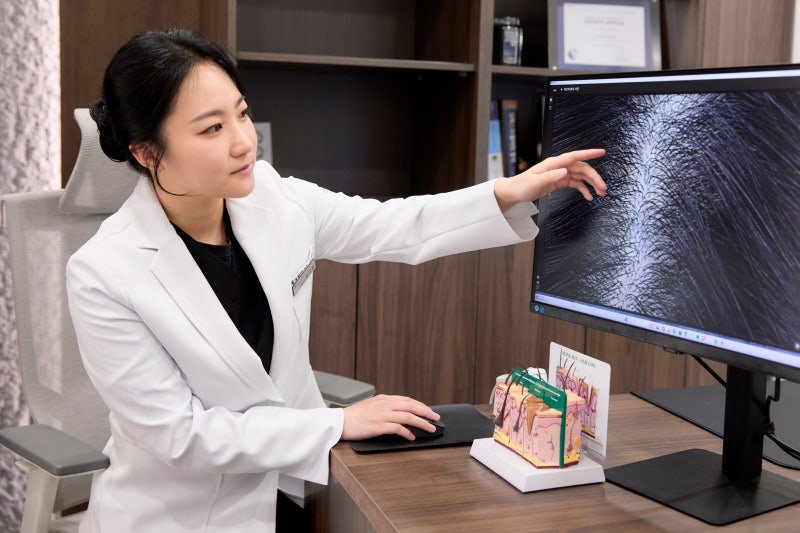
Seoul Hair Loss Clinic (Consultation): Answering the Question ‘Why Am I Losing More Hair During Treatment?’
Hello.
I am Kim Da-jung, the head director of Cordia Clinic.
[Premium Hair Loss Treatment] Kim Da-jung, Head Director of Cordia Clinic | ||
<1:1 Customized Diagnosis> Based on tens of thousands of clinical data, Precise focus and surgical skills perfected through surgical training | ||
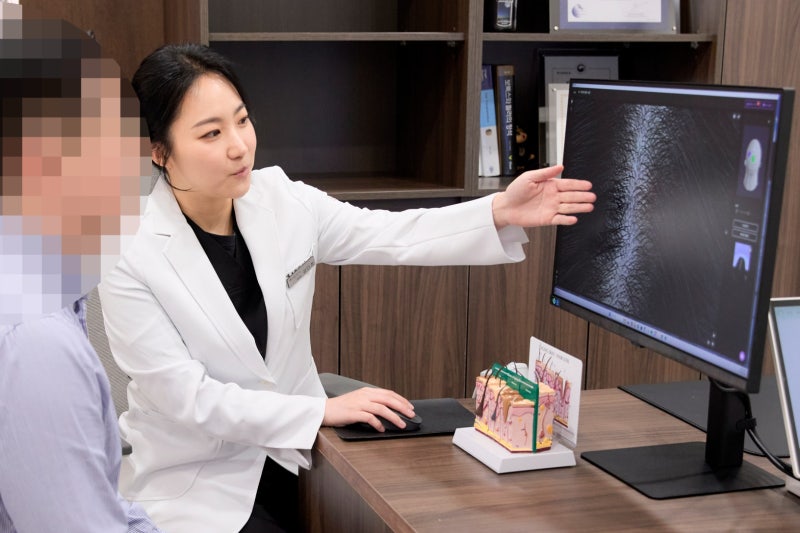
Accurate analysis based on 3D AFS precision diagnosis <Precision Diagnosis System> | ||
Sustainable hair loss treatment completed with a low-pain system <Pain Control Know-how> |
‘I started taking medication, but it feels like I'm losing even more hair.’
About one to two months after starting treatment, some people experience the perplexing phenomenon of losing more hair than usual.
You might worry if the treatment is wrong or if your scalp is being overly stimulated.
Indeed, patients who return for follow-up visits are most anxious during this period.
To get straight to the point, this phenomenon is proof that the medication has started working properly.
This is what we commonly refer to as the ‘shedding effect.’
In this article, I will explain step-by-step why the shedding effect occurs, how long it lasts, and how to distinguish it from situations that genuinely warrant concern.
<Our Treatment Philosophy>
Shedding effect: Why do I lose more hair when I start treatment?
To understand this, you first need to know the hair's life cycle.
Our hair constantly cycles through stages of growth, regression, resting, and shedding.
About 10 percent of all hair is always in the resting phase, naturally falls out, and new hair grows in its place.
However, in androgenetic alopecia, this cycle is abnormally prolonged or stalled. When medication is introduced, the process of returning to a normal cycle begins.
During this process, old hairs fall out all at once.
To draw an analogy, it's similar to pruning old branches to make way for new shoots.
That's why at Seoul Hair Loss Clinic, we often explain the shedding effect as ‘a sign that the hair follicles are starting to respond.’
When does it start, and when does it subside?
The most challenging part of the shedding effect is often the feeling that there's no end in sight.
That's why when I first prescribe medication, I explain the timeline to patients in advance.
Experiencing something with knowledge is entirely different from experiencing it without, in terms of psychological burden.
Generally, increased hair loss is experienced between 2 weeks and 2 months. The duration varies individually but typically lasts 1 to 2 months, rarely exceeding 3 months.
After this period, hair loss gradually decreases, and newly grown hair settles in, leading to a recovery in overall hair density.
The problem is that many people stop treatment during this very period.
They self-diagnose, thinking, ‘I lost more hair after taking the medicine, it must not be working for me,’ and discontinue it.
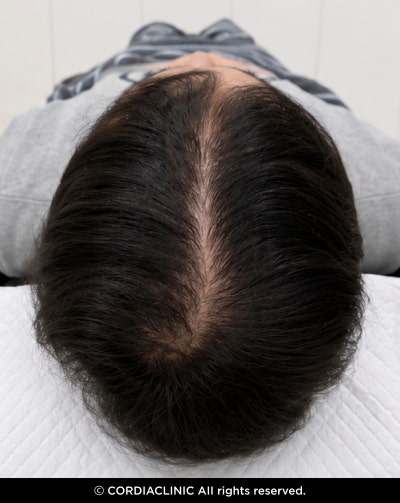
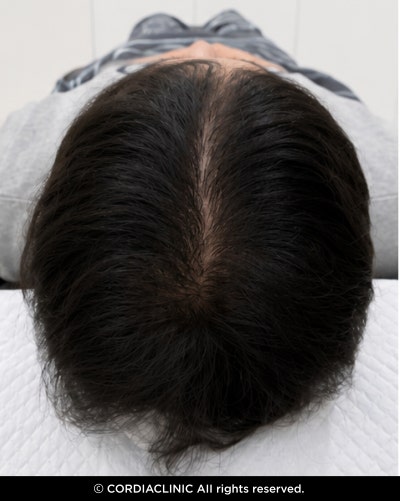
However, they stop before entering the phase where they could actually see results, ultimately missing the golden time to halt progression.
That's why at Seoul Hair Loss Clinic, we emphasize that how you navigate the first two to three months determines the overall success of the treatment.
How to distinguish between the shedding effect and actual progressive hair loss
The typical characteristic of the shedding effect is an increase in hair loss at a certain point after treatment, which then naturally decreases after a specific period.
The shedding hairs tend to be relatively short and thin, and often, there are no other accompanying symptoms like pain or itching on the scalp.
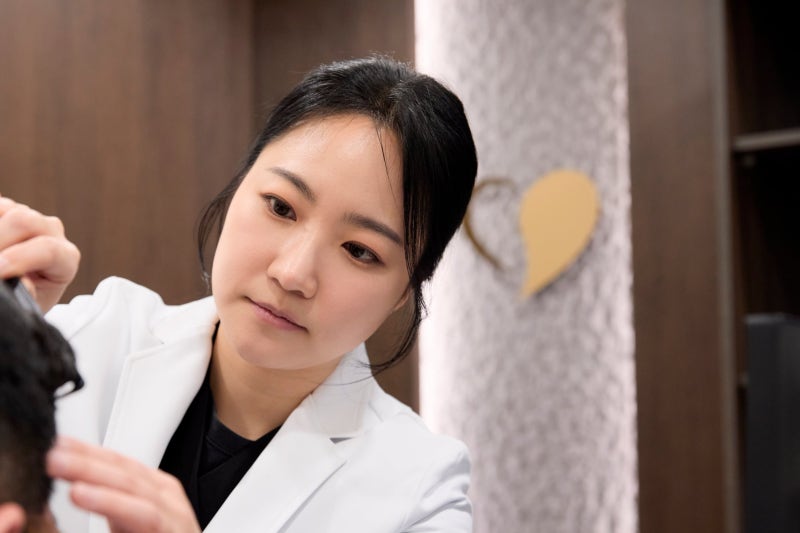
On the other hand, if hair loss shows no signs of decreasing after 3 months, or if it's accompanied by scalp itching, redness, or pain, or if circular bald patches appear in specific areas, it's advisable to seek a re-evaluation at the medical institution where you received treatment.
This is why at Seoul Hair Loss Clinic, we advise patients, ‘Do not arbitrarily stop medication; please visit us first for confirmation.’
Distinguishing between the shedding effect and other issues requires an accurate assessment based on both scalp condition and hair examination.
An increase in hair loss does not necessarily mean treatment failure.
On the contrary, successfully navigating this period is a crucial phase that determines the overall outcome.
If you are currently experiencing more hair loss than usual and feel anxious, please contact Seoul Hair Loss Clinic first instead of discontinuing medication based on self-diagnosis.
We will review your stage of progression and response together.
This has been Kim Da-jung, Head Director of Cordia Clinic.
Thank you.
< Helpful articles to read together >
<Inquiries - Naver TalkTalk>
<Cordia Clinic Announcements> | ||
Cordia Clinic operates on a 100% appointment-based system to provide sufficient consultation and customized treatment for each individual. To ensure quality of care and a private treatment environment, we accept a limited number of appointments, so please understand in advance that it may be difficult to book an appointment on your desired schedule. We promise to provide accurate diagnosis and dedicated treatment. Thank you. |
<Clinic Hours> | ||
Mon · Tue · Thu · Fri : 11:00 ~ 20:00 (Lunch break : 14:00 ~ 15:00) Saturday : 10:00 ~ 16:00 (No lunch break) | ||
6th Floor, KR Tower, 429 Seolleung-ro, Gangnam-gu (Seolleung Station Exit 3) | ||
02-568-8575 |