2026-11-06
What Is an Amino Acid IV Infusion? How Does It Differ from Protein in Food? | IV Drip Clinic Near Seolleung Station
Explains how amino acid IV infusions differ from protein in food, what Armix Injection contains, when it may help, and why it is not a replacement for a balanced diet.
Hello, I am Dr. Dajeong Kim, director of Cordia Clinic.
Some people seek out amino acid IV infusions when fatigue lasts for a long time or when they haven’t been able to eat properly.
You may be wondering:
“You can get protein from eating meat or eggs, so is there really a reason to get it through an IV?”
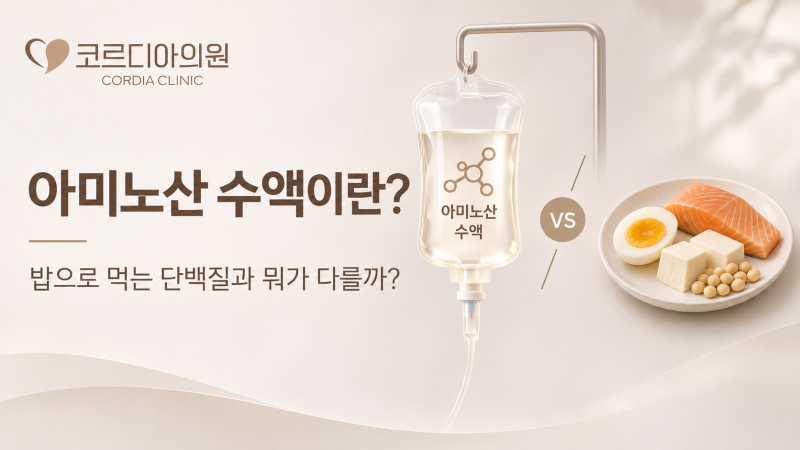
To answer briefly, protein from food and amino acid IV infusions reach the body through different routes.
Protein in food is broken down through digestion and absorbed as amino acids, whereas amino acid IV infusions bypass the digestive tract and are delivered directly into a vein.
That said, for a healthy person, an IV infusion is not necessarily more effective than eating.
Today, we will look at the differences between these two approaches and the situations in which an amino acid IV infusion may help.
1. What Role Do Amino Acids Play in the Body?
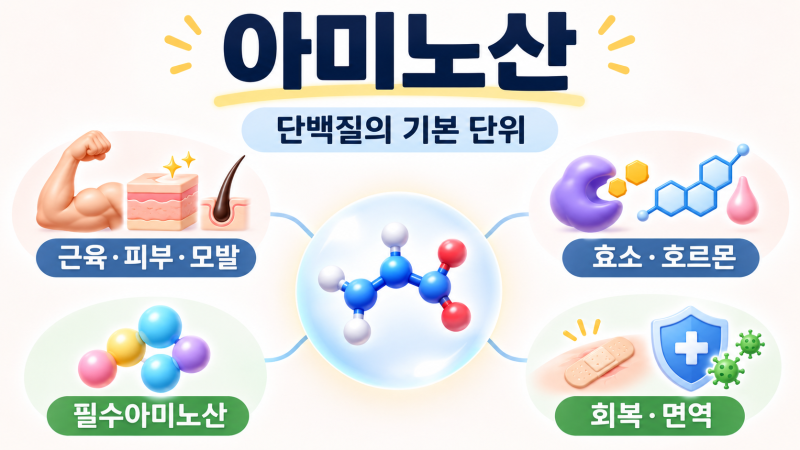
Amino acids are the basic building blocks that make up proteins.
The body uses amino acids to maintain tissues such as muscle, skin, and hair, and to synthesize enzymes and some hormones.
They are also essential for wound healing and for maintaining immune function.
Some amino acids can be synthesized in the body, but essential amino acids must be obtained from outside sources.
Therefore, getting enough protein is important for keeping body tissues functioning normally.
2. How Do Food Protein and IV Infusions Differ?
When we eat eggs, meat, tofu, or other foods, the protein they contain is broken down into small peptides and amino acids in the stomach and small intestine.
These are then absorbed in the small intestine and carried through the bloodstream to the tissues that need them.
In contrast, an amino acid IV infusion delivers a solution already made up of amino acids directly into a vein.
The biggest difference is that it skips digestion and intestinal absorption.
Category | Protein from Food | Amino Acid IV Infusion |
Route of delivery | Digestion and absorption in the GI tract | Direct intravenous administration |
Nutritional composition | A wide range of nutrients beyond protein | Mainly amino acids |
Suitable situations | When normal eating is possible | Certain situations where oral intake is difficult or nutritional supplementation is needed |
Precautions | Consider digestive and absorptive function | Check for risks related to IV injection and underlying conditions |
What matters is that the delivery routes differ. That does not mean IV infusions are always superior to food.
3. What Kind of Amino Acid IV Solution Is Armix Injection?
Armix Injection is a prescription drug containing a variety of essential and non-essential amino acids.
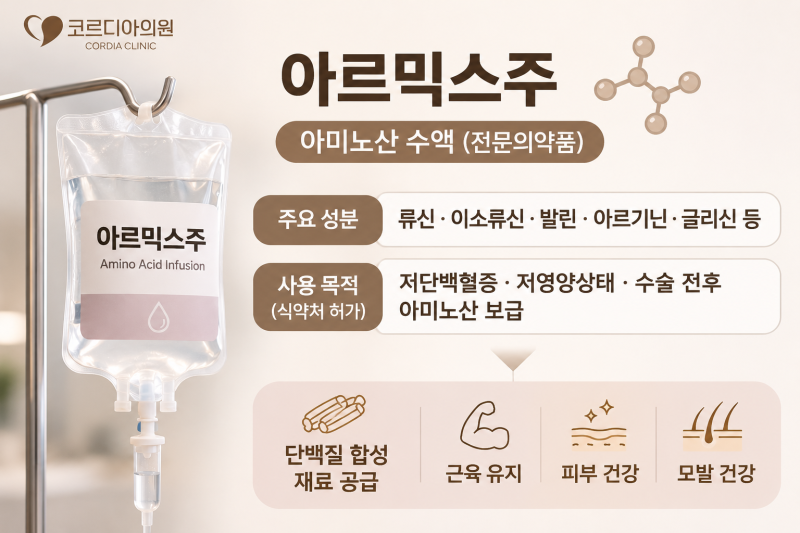
Representative amino acids it contains include leucine, isoleucine, valine, arginine, and glycine.
According to the approved indications from the Ministry of Food and Drug Safety, it is used to supply amino acids in situations such as hypoproteinemia (low blood protein), undernutrition, and before and after surgery.
These amino acids serve as raw materials for protein synthesis in the body.
However, an amino acid IV solution alone cannot provide sufficient calories and all essential nutrients, so it cannot fully replace a balanced diet.
4. In What Situations Might an Amino Acid IV Infusion Help?
An amino acid IV infusion can be considered especially when a person is not getting enough nutrition.
For example, this may apply when food intake has remained low for an extended period, when nutritional status has declined around the time of surgery, or when nutrition through the digestive tract is insufficient.
Even in these situations, if oral intake is possible, food or oral nutritional supplements are generally considered first.
Whether an amino acid IV infusion is needed should be decided by evaluating the actual degree of nutritional deficiency, the likelihood of recovering normal eating, and any underlying conditions.
In my own practice, I focus not just on whether a patient feels fatigued, but also on their recent food intake, changes in body weight, and whether they are able to get adequate nutrition.
5. Will an Amino Acid IV Infusion Relieve Fatigue?
Amino acids are needed for normal energy metabolism and for maintaining body tissues.
Therefore, in patients with accompanying nutritional deficiency, supplying the missing amino acids may help restore their nutritional status.
However, fatigue can have many causes, including lack of sleep, anemia, thyroid disease, and stress.
There is not enough clinical evidence to show that an amino acid IV infusion alone immediately improves fatigue in healthy people.
If fatigue persists, other medical causes should be checked in addition to nutritional status.
6. Frequently Asked Questions
Q. Can I skip protein-rich foods if I get an amino acid IV infusion?
No. Food provides not only protein but also calories, fat, vitamins, and minerals, so an IV infusion cannot replace a normal diet.
Q. Is an amino acid IV infusion safe for everyone?
No. In severe kidney disease, certain liver diseases, heart failure, and similar conditions, administration may be prohibited or require special caution.
In addition, nausea, vein irritation, and hypersensitivity reactions can occur during infusion, so an evaluation by a healthcare professional is necessary.
7. Amino Acid IV Infusions: What Matters Is Using Them When They Are Needed
Amino acids are essential for maintaining a wide range of body tissues, including muscle, skin, and hair.
In general, the best approach is to get the protein you need through a balanced diet.
However, if nutritional intake is insufficient, or if intravenous nutrition is medically necessary for other reasons, an amino acid IV infusion can be considered.
Rather than being a better way to nourish the body than eating, an amino acid IV infusion is best understood as a medical tool that supports nutrition when it is needed.
References
Ministry of Food and Drug Safety, Drug Information Integrated System. Armix Injection approved indications.
Daehan Pharmaceutical Industry Co., Ltd. Armix Injection product information.
Clinical nutrition guidelines related to the Korean Society of Surgical Metabolism and Nutrition and the Korean Society for Parenteral and Enteral Nutrition. Nutritional support for critically ill patients. 2026.
※ This article is intended to provide general medical information. Whether it is actually administered should be determined based on each individual’s nutritional status, underlying conditions, and the medication’s approved indications.
〈Cordia Clinic Appointment Information〉
Cordia Clinic operates on a 100% appointment-only basis to allow for thorough consultations and individualized care. Please book in advance by phone, KakaoTalk, or Naver before your visit.
〈Booking and Inquiries〉
Phone: 02-568-8575
Feel free to contact us by KakaoTalk, Naver booking, or any other convenient method.
〈Office Hours〉
Mon, Tue, Thu, Fri: 11:00 AM – 8:00 PM
Lunch break: 2:00 PM – 3:00 PM
Saturday: 10:00 AM – 4:00 PM
We see patients on Saturdays without a lunch break.
〈Directions〉
429 Seolleung-ro, Gangnam-gu, Seoul
6th Floor, KR Tower, Cordia Clinic
Exit 3, Seolleung Station, Burger King Building
#AminoAcidIV #AminoAcidIVBenefits #WhatIsAminoAcidIV #AminoAcidInjection #ArmixInjection #ProteinIV #ProteinInjection #ProteinSupplement #AminoAcidBenefits #EssentialAminoAcids #NonessentialAminoAcids #NutritionIV #NutritionInjection #NutritionSupplementIV #FatigueReliefIV #FatigueReliefInjection #NutritionalDeficiency #Undernutrition #Hypoproteinemia #ReducedFoodIntake #LowAppetite #MuscleHealth #ProteinMetabolism #NutritionManagement #IVTherapy #IVTherapyEffects #IVSideEffects #SeolleungIV #YeoksamIV #DaechiIV