2026-11-25
What Is NAD+ IV Therapy? How Far Does the Evidence for Anti-Aging and Fatigue Recovery Go?
Explains what NAD+ IV therapy is, what studies show about blood NAD+ levels, fatigue relief and anti-aging claims, and the safety points to consider.
Hello. I am Kim Da-jeong, Chief Director of Cordia Clinic.
Recently, “NAD+ IV therapy” has been drawing attention among people interested in fatigue recovery and anti-aging care.
NAD+ is a substance involved in cellular energy production and DNA damage repair, and it is also an important topic in aging research.
So, would supplying NAD+ through an IV drip reduce fatigue and slow down aging?
While it is scientifically established that NAD+ plays an important role in cell function, the fatigue-recovery and anti-aging effects of NAD+ IV therapy still require sufficient human clinical research.
Today, we will look at how NAD+ works and what the actual research shows.
1. What Role Does NAD+ Play in the Body?
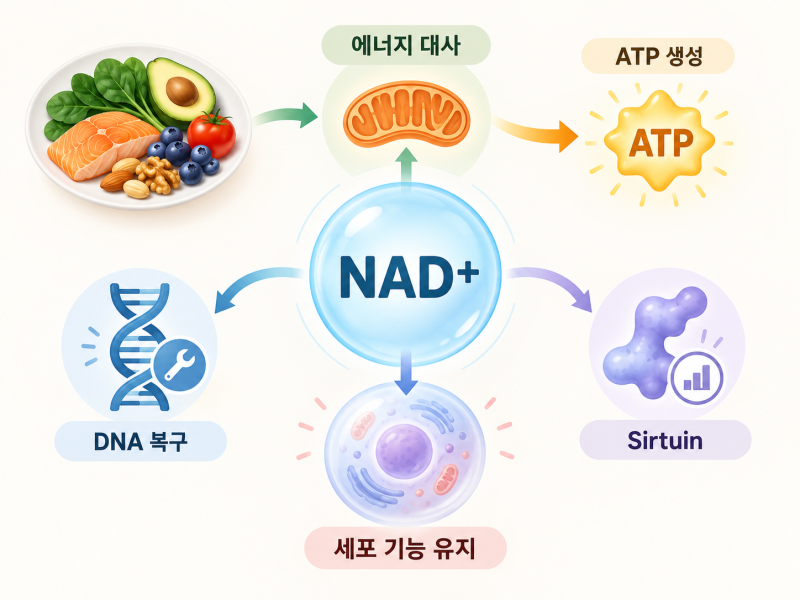
NAD+ (Nicotinamide Adenine Dinucleotide) is a coenzyme found in all living cells.
It plays a particularly important role in cellular energy metabolism.
Our bodies use carbohydrates, fats, and other nutrients from food to produce ATP, an energy molecule.
NAD+ helps energy production take place by transferring electrons during this process.
It is also required for the action of PARP enzymes, which are involved in DNA damage repair, and sirtuin proteins, which regulate cellular metabolism.
In this way, NAD+ is not simply a nutrient; it is an essential substance for maintaining energy metabolism and cell function.
2. Why NAD+ Is Drawing Attention in Aging Research
Some animal studies have observed that NAD+ levels in tissues decline with age.
Studies have also reported that mitochondrial function and metabolic markers improved when NAD+-related metabolic pathways were regulated.
Based on this research, NAD+ has become an important subject in studies of healthy aging.
However, in humans, age-related decline in NAD+ has not been consistently confirmed across all tissues.
In addition, raising NAD+ levels does not directly mean that biological aging is slowed or lifespan is extended.
3. Do Blood NAD+ Levels Actually Rise After an NAD+ IV Drip?
In a 2019 study published in Frontiers in Aging Neuroscience, NAD+ was administered intravenously to 8 people over 6 hours.
The results showed that plasma NAD+ concentration at the end of the infusion had increased by about 398% compared with before administration.
Several NAD+-related metabolites were also observed to increase.
This shows that intravenously administered NAD+ is metabolized in the body and affects blood indicators related to NAD+.
However, the rise in blood NAD+ levels alone cannot be taken as confirmation of fatigue-recovery or anti-aging effects.
4. What Does Research Say About Fatigue Recovery and Anti-Aging Benefits?
A systematic review published in Ageing Research Reviews in 2026 analyzed 33 human studies and 80 animal studies involving NAD+-related substances.
In human studies, the NAD+ precursors NR and NMN were mainly taken orally.
These substances increased NAD+-related markers in the blood and cells, but improvements in physical function and aging-related markers were inconsistent.
In addition, a meta-analysis of 27 studies published in 2026 found that some NAD+ precursors may improve certain measures such as exercise endurance, but no significant improvement in subjective fatigue was confirmed.
Importantly, most of these studies concern oral NAD+ precursors, so their results cannot be interpreted as equivalent to the effects of an NAD+ IV drip.
Currently, there are not enough large-scale randomized controlled trials proving whether NAD+ IV injections are effective for fatigue recovery or slowing aging.
5. Safety Points to Consider With NAD+ IV Therapy
NAD+ is a substance that already exists in the body, but it requires a separate safety assessment when administered intravenously.
A small retrospective study published in 2026 reported nausea, abdominal discomfort, increased heart rate, and chest tightness in the NAD+ IV injection group.
Therefore, the infusion rate and the patient's condition should be carefully considered.
In particular, if there is an underlying condition such as heart, liver, or kidney disease, a prior evaluation is important.
In addition, sterility and quality control are critical for products used in IV injections, so the suitability of the product used should also be checked.
6. How Should We Understand NAD+ IV Therapy?
NAD+ is an important substance involved in various physiological functions, including cellular energy metabolism and DNA damage repair.
That is why it is also a field where future research is highly anticipated.
That said, it is hard to conclude that simply receiving an NAD+ IV drip will relieve fatigue or prevent aging.
If you have persistent fatigue, it is important to first check other causes, such as lack of sleep, anemia, thyroid disease, or nutritional status.
NAD+ IV therapy is a scientifically interesting area of research, but its actual therapeutic effects and long-term safety need to be clarified through future human clinical studies.
References
Grant R, et al. (2019). A Pilot Study Investigating Changes in the Human Plasma and Urine NAD+ Metabolome During a 6 Hour Intravenous Infusion of NAD+. Frontiers in Aging Neuroscience.
Vinten KT, et al. (2025). NAD+ precursor supplementation in human ageing: clinical evidence and challenges. Nature Metabolism.
Gallagher C, et al. (2026). NAD+ supplementation for anti-aging and wellness: A PRISMA-guided systematic review of preclinical and clinical evidence. Ageing Research Reviews.
Reyna K, et al. (2026). Intravenous infusion of NAD+ versus nicotinamide riboside: a retrospective tolerability pilot study in a real-world setting. Frontiers in Aging.
※ This article is intended solely to provide general medical information. The fatigue-recovery and anti-aging effects of NAD+ IV injections have not been established, and whether treatment is appropriate should be determined based on each product's approved labeling and an individual's health status.
〈Cordia Clinic Reservation Information〉
Cordia Clinic operates on a 100% appointment-only basis to allow for thorough consultations and individualized care. Please make a reservation by phone, KakaoTalk, or Naver before your visit.
〈Booking and Inquiries〉
Phone: 02-568-8575
Please reach out through your preferred method, such as KakaoTalk or Naver booking.
〈Clinic Hours〉
Mon, Tue, Thu, Fri: 11:00 AM – 8:00 PM
Lunch break: 2:00 PM – 3:00 PM
Saturday: 10:00 AM – 4:00 PM
We see patients on Saturdays without a lunch break.
〈Directions〉
429 Seolleung-ro, Gangnam-gu, Seoul
Cordia Clinic, 6th Floor, KR Tower
Seolleung Station, Exit 3, Burger King building
#NADIVdrip #NADplus #NADinjection #NADIVeffects #NADIVsideeffects #NADfatigue #NADaging #NADantiaging #NADdrip #NADshot #NADbenefits #NADresearch #FatigueRecoveryDrip #FatigueRecoveryShot #NutritionDrip #NutritionShot #AntiAgingResearch #AgingCare #CellularEnergy #Mitochondria #ATPproduction #Sirtuins #DNArepair #ChronicFatigue #FatigueCauses #IVtherapy #PrivateIVRoom #SeolleungIV #YeoksamIV #CordiaClinic
Frequently Asked Questions
Has the fatigue-recovery effect of NAD+ IV therapy been confirmed?
Not yet. Large-scale randomized controlled trials proving the fatigue-recovery effect of NAD+ IV injections are still lacking, and more human clinical research is needed.
Do blood NAD+ levels rise after an NAD+ IV drip?
Yes. In a 2019 study, when NAD+ was infused intravenously into 8 people over 6 hours, plasma NAD+ concentration at the end of the infusion increased by about 398% compared with before administration. However, a rise in blood levels alone cannot confirm fatigue-recovery or anti-aging effects.
What side effects should I be aware of with NAD+ IV therapy?
Small studies have reported nausea, abdominal discomfort, increased heart rate, and chest tightness. The infusion rate and the patient's condition should be carefully considered, and if there is an underlying condition such as heart, liver, or kidney disease, a prior evaluation is important.
Can I receive an NAD+ IV drip if I have an underlying condition?
If you have an underlying condition, a pre-infusion evaluation is important. Extra caution is needed especially with heart, liver, or kidney disease, and whether treatment is appropriate should be determined based on your individual health status.
Are the effects of oral NAD+ precursors the same as those of an IV drip?
No, they cannot be considered the same. Most of the studies cited in this article concern oral NAD+ precursors such as NR and NMN, so their effects cannot be equated with those of an IV drip.
What should I do if I have persistent fatigue?
It is important to first check other possible causes, such as lack of sleep, anemia, thyroid disease, or nutritional status. It is hard to say for certain that an NAD+ IV drip alone will relieve fatigue or prevent aging.