2026-11-23
Why Does Hair Thin After Menopause? Causes and Treatments for Midlife Women's Hair Loss | Seolleung Station Hair Loss Clinic
Explains why hair thins after menopause, how female pattern hair loss appears, and treatment options including minoxidil and scalp injections from a Seolleung clinic director.
Hello, I'm Dajeong Kim, director physician at Cordia Clinic.
Many women in their 40s and 50s notice that their hair has become thinner than before and that their part has widened.
In particular, when hair volume noticeably decreases around menopause, many wonder whether it's due to declining female hormones.
Hair loss after menopause can result from a combination of factors, including changes in female hormones, aging, and genetic predisposition.
Fortunately, if hair follicles are still present, medication and scalp injection treatments can help slow hair loss and improve the condition of your hair.
Today, we'll look at the causes and treatment options for hair loss in midlife women.
1. Why Hair Gets Thinner After Menopause
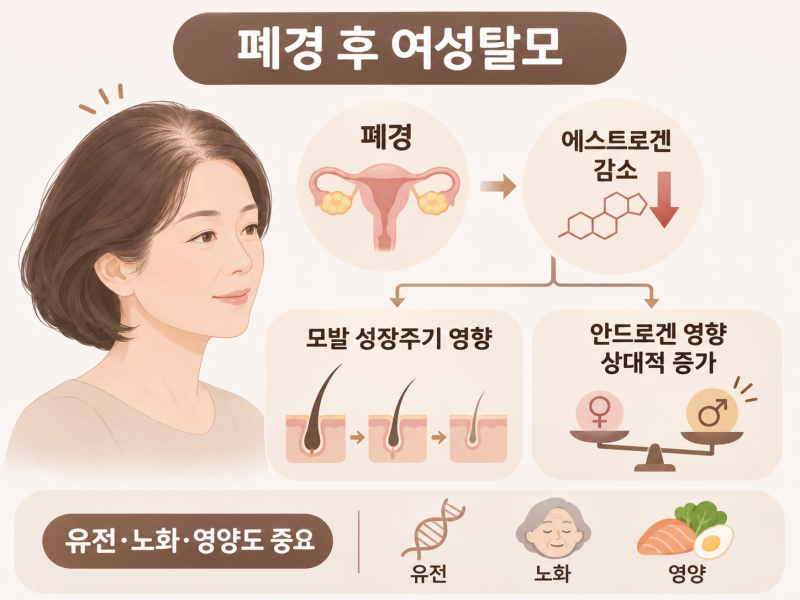
As menopause progresses, estrogen produced by the ovaries declines.
Estrogen is a hormone involved in the hair growth cycle and the physiological function of hair follicles.
A 2025 review published in Maturitas noted that hormonal changes around menopause can affect hair thickness, density, and growth cycle.
After menopause, as estrogen declines, the influence of androgens may become relatively more pronounced.
However, the role of hormones in female pattern hair loss is more complex than in male pattern hair loss, and declining estrogen alone cannot explain all cases.
Genetic predisposition, aging, and nutritional status are also important factors.
2. What Does Hair Loss Look Like in Midlife Women?
The most common type is female pattern hair loss (FPHL).
Unlike male pattern hair loss, which typically appears as a receding M-shaped hairline or thinning at the crown, female pattern hair loss often causes overall thinning of hair around the crown and along the part.
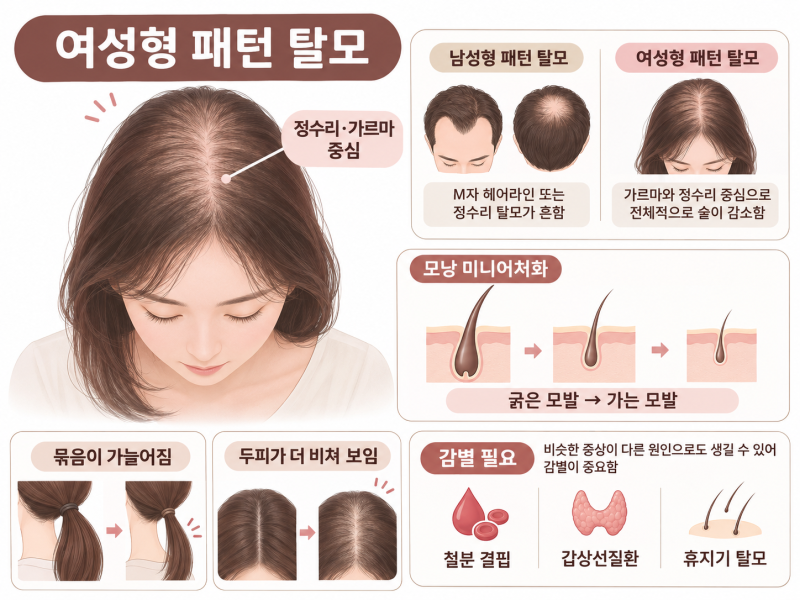
These changes are related to “follicular miniaturization.”
As follicles gradually shrink, thicker hairs become finer and the growth phase shortens.
In particular, if your ponytail feels thinner or you can see more scalp through your part than before, female pattern hair loss may be a possibility.
However, iron deficiency, thyroid disorders, and telogen effluvium can cause similar symptoms, so accurate differentiation is important.
3. How Is Hair Loss After Menopause Treated?
① Minoxidil Treatment
Minoxidil is the most widely used treatment ingredient for female pattern hair loss.
It acts on the hair growth cycle to prolong the growth phase and helps improve hair thickness and density.
Topical minoxidil is the most common option, and depending on a clinician's assessment, low-dose oral minoxidil may also be considered when needed.
Evaluating results generally requires consistent treatment for about 6 to 12 months.
② Scalp Injection Treatments
Recently, scalp injection treatments aimed at improving the environment around hair follicles and supporting hair growth have also been studied.
Botulinum toxin and PDRN, which Cordia Clinic uses, are among the ingredients applied in this treatment approach.
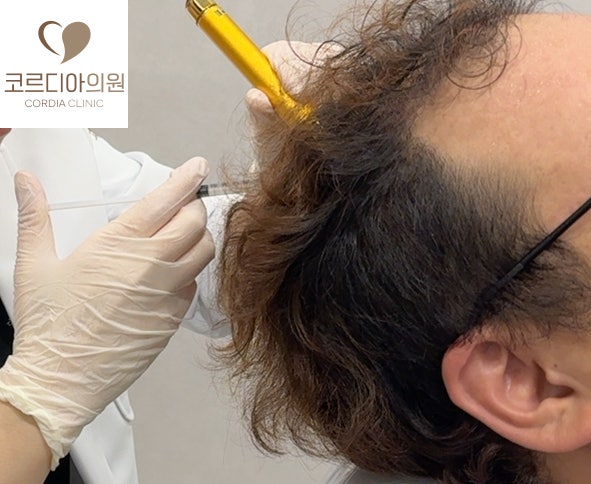
Botulinum toxin is being studied mainly for its effects on scalp muscle tension and the local environment.
A 2025 meta-analysis published in Dermatologic Surgery reviewed eight studies and reported that the botulinum toxin treatment groups showed an increase in hair count compared with control groups.
The effects of PDRN on hair growth are being investigated based on mechanisms related to tissue repair, angiogenesis, and inflammation control.
A small study of 40 patients with female pattern hair loss observed improvements in hair count and thickness after PDRN treatment.
Research on exosomes has also reported potential improvements in hair density and thickness.
However, these injection and regenerative treatments are supported by limited research, with small study sizes and short follow-up periods, and formulations vary between products. For that reason, they are best considered as adjunctive treatments rather than replacements for standard medication.
4. Can Treatment Make Hair Volume Return?
Female pattern hair loss is a gradually progressing condition, but as long as hair follicles have not been completely lost, treatment may improve hair condition.
In particular, in early stages when thinned hairs are still present, improvements in hair thickness and density can be expected.
In my practice, I focus less on the number of hairs falling out and more on how much the hair has thinned and how the density at the crown is changing.
Reviewing scalp magnification and photo results together makes it easier to objectively compare changes before and after treatment.
5. Frequently Asked Questions
Q. Will hair loss improve if I take female hormone supplements?
Hormone therapy does not improve hair loss in every case after menopause. Hormone replacement therapy is generally not recommended solely to treat hair loss, and the decision should take into account menopausal symptoms and overall health.
Q. Can treatment still work if menopause happened long ago?
Even if a long time has passed since menopause, treatment may improve hair condition as long as hair follicles remain. However, the response varies depending on the extent of hair loss.
Q. Can injection treatments work on their own?
Some injection treatments have reported encouraging research results, but their effectiveness as standalone treatments has not been fully established. Depending on the type and progression of hair loss, combining them with medication may be considered.
6. Early Management Matters for Hair Loss in Midlife Women
Some women dismiss thinning hair after menopause as simply a part of getting older and leave it untreated.
However, female pattern hair loss that is detected early and managed appropriately can help slow its progression and maintain hair condition.
In particular, if hair loss progresses rapidly over a short period or is accompanied by scalp pain, itching, or loss of eyebrow hair, other hair loss conditions should also be evaluated.
If you've noticed less hair volume after menopause, rather than assuming it's just aging, it's important to check the current condition of your hair follicles and choose a treatment that suits you.
References
Menopause and hair loss in women: Exploring the hormonal transition. Maturitas. 2025.
Hair Loss in Women. New England Journal of Medicine. 2025.
Effects and Safety of Botulinum Toxin Injection in Treatment of Androgenetic Alopecia: A Meta-analysis and Systematic Review. Dermatologic Surgery. 2025.
Polydeoxyribonucleotide in Female Pattern Hair Loss: Current Evidence and Knowledge Gaps. Journal of Cosmetic Dermatology. 2026.
※ This article is intended to provide general medical information and does not replace diagnosis or treatment based on an individual's hair loss type and health condition.
〈Cordia Clinic Appointment Guide〉
Cordia Clinic operates on a 100% appointment basis to allow for thorough consultations and personalized care. Please make a reservation by phone, KakaoTalk, or Naver before your visit.
〈Booking & Inquiries〉
Phone: 02-568-8575
Feel free to reach out through whichever method is most convenient for you, such as KakaoTalk or Naver booking.
〈Clinic Hours〉
Mon, Tue, Thu, Fri: 11:00 AM ~ 8:00 PM
Lunch break: 2:00 PM ~ 3:00 PM
Saturday: 10:00 AM ~ 4:00 PM
On Saturdays, we see patients without a lunch break.
〈Directions〉
429 Seolleung-ro, Gangnam-gu, Seoul
6th Floor, KR Tower, Cordia Clinic
Seolleung Station, Exit 3, the building with Burger King
#PostMenopauseHairLoss #MenopauseHairLoss #MidlifeWomenHairLoss #FemaleHairLoss #FemalePatternHairLoss #MenopausalHairLoss #FemaleHormoneHairLoss #EstrogenHairLoss #FemaleCrownHairLoss #FemaleParthingHairLoss #HairVolumeLoss #ThinningHair #FollicleMiniaturization #CausesOfFemaleHairLoss #FemaleHairLossTreatment #MidlifeWomenHairLossTreatment #PostMenopauseHairLossTreatment #FemaleHairLossMedication #Minoxidil #OralMinoxidil #ScalpInjection #FemaleHairLossInjection #ScalpBotox #PDRN #ExosomeHairLoss #HairDensity #HairThickness #SeolleungHairLoss #YeoksamHairLoss #CordiaClinic