2026-10-16
Do Skin Boosters Shrink Pores? Examining Causes Such as Sebum, Elasticity, and Acne Scars | Cordia Clinic, Seolleung Station Dermatology
Explains the main causes of enlarged pores, including excess sebum, loss of elasticity, acne scars, and hair follicle structure, and reviews clinical research on skin boosters.
Hello. I am Dajeong Kim, the director physician of Cordia Clinic.
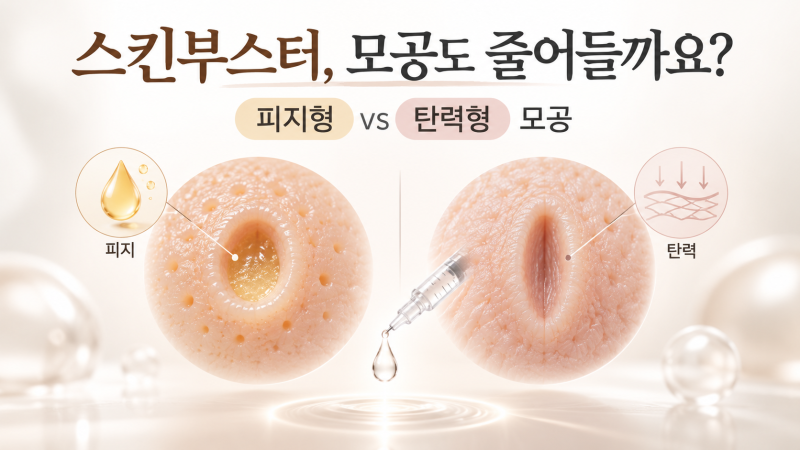
“Can skin boosters shrink pores too?” An illustration comparing round, oil-filled sebum-type pores with stretched, sagging elasticity-type pores.
"Will my pores get smaller if I get Juvelook?"
"Do Rejuran or water-glow injections help reduce pores too?"
"Do people whose pores are enlarged due to excess sebum need a different treatment from people whose pores are enlarged due to loss of skin elasticity?"
Enlarged-looking pores are a concern for many people, regardless of age or skin type.
In particular, when pores on the nose and the cheeks beside it, or in the butterfly zone (the area spanning the nose and cheeks), stand out, or when the skin surface doesn't look smooth even with makeup, people often start searching for ways to minimize their pores.
Recently, various skin booster treatments such as Rejuran, Juvelook, water-glow injections, and skin Botox have been introduced for pore management.
But do skin boosters actually shrink pores?
I, too, once struggled with enlarged pores.
While taking Isotinon (isotretinoin), I noticed that my sebum production decreased. Afterward, I received Juvelook treatments and experienced a change in which my pores looked less prominent than before.
However, based on personal experience alone, it is not possible to accurately determine how much each treatment contributed.
At that time, changes in sebum production and changes in skin texture may have worked together.
In fact, pores do not get enlarged because of a single cause.
To put the conclusion first: some skin boosters have shown results in clinical studies that improve pore size or skin texture. However, the expected effects differ depending on the cause of enlarged pores, and not every skin booster reduces sebum production or permanently shrinks pores.
Today, I will explain the causes of enlarged pores, the mechanisms of action of isotretinoin and Juvelook, and look at research on Rejuran, hyaluronic acid skin boosters, and skin Botox.
1. Why do pores get enlarged?
Pores are the openings where hair follicles and sebaceous glands connect to the skin surface.
Because they serve as channels through which sebum and hair exit the skin, pores exist even in normal skin.
Therefore, completely eliminating pores or permanently closing them is not the goal of general pore care.
What we commonly call pore reduction actually means reducing the size of the pore opening or improving the surrounding skin condition so that pores become less noticeable.
2016 Medical Review on Pores
A 2016 paper published in Dermatologic Surgery analyzed the causes of enlarged pores.
The researchers presented three major factors.
Excessive sebum production
Decreased elasticity of the skin around pores
Enlargement of hair follicles
The paper also explained that recurring acne, hormonal changes, UV exposure, and skincare habits can influence pores.
There is an important point here.
Pores enlarged by sebum and pores enlarged by loss of elasticity develop through different mechanisms.
Therefore, even with the same skin booster, the degree of pore improvement may vary from person to person.
2. First cause: pores enlarged by excess sebum
Sebum production is an important factor affecting pore size.
Sebum is a fatty substance on the skin surface, produced by the sebaceous glands.
Normal sebum plays a role in protecting the skin.
However, when sebum production increases, it can affect the structure of the area where hair follicles and sebaceous glands connect.
In particular, the nose and the cheeks around it are areas with active sebum production, so pores there can appear relatively prominent.
Has the relationship between sebum and pores actually been confirmed in research?
A 2006 study published in the British Journal of Dermatology analyzed facial pores and sebum output in 60 participants.
As a result, pore size showed a significant association with sebum output.
Among the variables analyzed, sebum output was the factor most strongly associated with pore size.
A 2013 study published in Skin Research and Technology also found that facial pores tended to be more prominent as sebum output increased.
These results support the idea that sebum production can influence pore size.
However, since these are mainly observational studies, the same causal relationship cannot be assumed for everyone.
Characteristics of sebum-type pores
Generally, the following patterns may appear together.
Prominent pores on the nose and the cheeks around it
Oily, shiny skin
Recurring blackheads and comedones
Accompanying acne
Pores that look more noticeable on days with high sebum production
However, sebum-type pores cannot be confirmed by appearance alone.
This is because decreased skin elasticity or acne scars often coexist.
3. Why do pores shrink when you take Isotinon?
The main ingredient in Isotinon is isotretinoin.
Isotretinoin is a prescription drug mainly used for severe acne or acne that does not respond adequately to existing treatments.
One of its most important actions is reducing the activity of the sebaceous glands and decreasing sebum production.
1994 Clinical Study
A prospective study published in 1994 administered isotretinoin to 30 patients with moderate to severe acne.
The researchers measured sebum-related indicators before treatment and after treatment.
After four months of treatment, the following changes were observed.
Evaluation Indicator | Change Compared with Before Treatment |
Indicator related to sebum storage within follicles | Decreased by about 79% |
Sustained sebum secretion rate | Decreased by about 83% |
The study also reported that some sebum-suppressing effect remained one year after treatment ended.
These results show that isotretinoin is a drug that can strongly suppress sebum production.
However, these figures reflect the dosage used in the study and the results observed in that patient group.
This does not mean that everyone's sebum will decrease to the same extent.
Will pores also get smaller when sebum decreases?
There is a correlation between excess sebum and pore size.
Therefore, if sebum production decreases, pores may become less noticeable in some people.
However, this does not mean that isotretinoin directly shrinks all types of pores or restores the elasticity of the skin around pores.
In particular, if the main cause is loss of skin elasticity or deep acne scars, reducing sebum alone may not produce sufficient improvement.
The change in which pores look smaller after taking isotretinoin can be explained in relation to suppression of sebum production, but not every pore problem requires this drug.
4. Can I take Isotinon if my pores are enlarged?
This point must be clearly distinguished.
Isotretinoin is not a general beauty supplement or skincare product for reducing pores.
It is a prescription drug used mainly to treat acne.
Therefore, it cannot be recommended simply because pores are enlarged.
Isotretinoin can cause the following side effects.
Severe dryness of the lips and skin
Dry eyes
Dryness of the nasal mucosa and nosebleeds
Changes in blood lipid levels
Elevated liver enzyme levels
Muscle or joint pain
In particular, exposure during pregnancy can cause serious congenital malformations in the fetus, so it must never be used during pregnancy.
For patients who may become pregnant, appropriate pregnancy prevention and related tests are necessary before treatment, during treatment, and for a set period after treatment ends.
The 2024 American Academy of Dermatology acne clinical guideline also emphasizes lipid and liver function tests and pregnancy-related safety management during isotretinoin treatment.
Taking isotretinoin on your own solely to reduce pores is not appropriate.
5. Second cause: pores enlarged by loss of skin elasticity
Now let's consider cases where pores look enlarged even though sebum production is not high.
In particular, on the cheeks, pores may look elongated downward or oval-shaped.
Changes in the elasticity and structure of the skin around pores may be involved.
The dermis contains collagen, elastic fibers, and other components.
These affect the skin's supportive capacity and mechanical properties.
As we age and UV exposure accumulates, these tissues can change.
As a result, the supportive capacity of the skin around pores may decrease, and the shape of pore openings may change.
Relationship between elasticity and pores confirmed in a 2013 study
The study introduced earlier also evaluated skin elasticity.
Its results showed a tendency for facial pores to become more prominent as skin elasticity decreased.
These results show that pores are not simply a matter of sebum.
For pores caused by loss of elasticity, it may be as important to consider structural changes in the skin around the pores as it is to reduce sebum.
This is why skin boosters and collagen-related treatments are being studied in this context.
6. How does Juvelook work on pores?
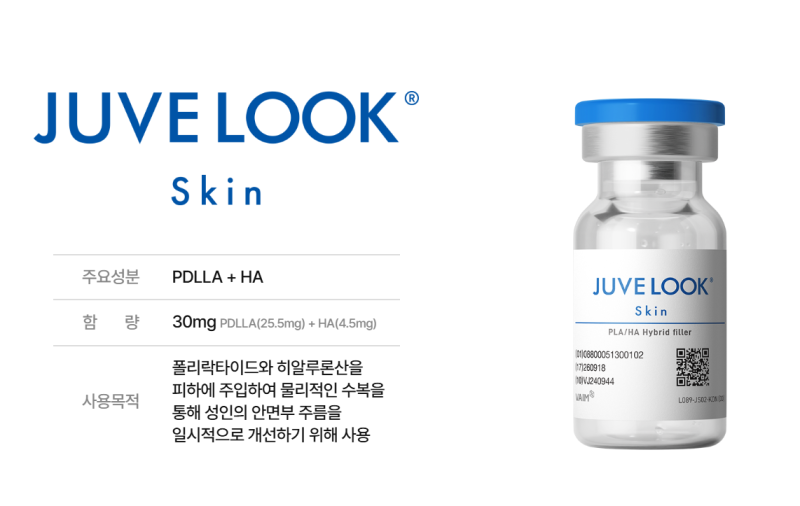
Juvelook is an injectable preparation containing PDLLA (poly-D,L-lactic acid) and hyaluronic acid (HA).
PDLLA is a biodegradable polymer, and its biological response in skin tissue and its role in collagen production are being studied.
Hyaluronic acid is a substance that interacts with water.
However, Juvelook products differ in ingredient content and intended use depending on the formulation.
According to official domestic product information, the approved use of the Juvelook Skin product is to temporarily improve facial wrinkles in adults.
Therefore, pore reduction should be evaluated separately from the official approved indications, based on the level of clinical research.
Will pores shrink if collagen increases?
Collagen and the extracellular matrix in the skin can affect the supportive capacity of the tissue around pores.
Therefore, structural changes in the dermis may have the potential to improve how noticeable pores are.
However, even when collagen increases, the actual pore opening does not necessarily become narrower.
Also, the fact that PDLLA's potential to stimulate collagen has been studied is a different claim from saying every patient will see the same pore-improving effect.
The pore-related effects of Juvelook are being studied from the perspective of skin texture and changes in dermal structure, but the size and duration of the effect require further verification.
7. 2025 Juvelook pore study: did pore scores actually improve?
In 2025, a study evaluating pore improvement was published in Plastic and Reconstructive Surgery – Global Open.
The paper title is as follows.
The Efficacy of Combined Microneedling and Topical Poly-D,L-Lactic Acid (Juvelook) Application for Facial Pore Reduction and Skin Texture Improvement.
This study included 15 patients with enlarged pores.
The researchers performed a total of three treatments combining microneedling with a PDLLA preparation.
The interval between treatments was three weeks.
Changes in pores and skin texture were evaluated at 12 and 22 weeks afterward.
Study Results
Evaluation Time Point | Average Pore Grade |
Before treatment | 6 points |
12 weeks after | 3 points |
22 weeks after | Improvement maintained |
The average pore evaluation score decreased from 6 points before treatment to 3 points at 12 weeks.
The researchers reported that they confirmed a statistically significant change.
Improvement was also observed in skin texture.
In addition, 80% of participants reported high satisfaction.
How should these results be interpreted?
This study shows that PDLLA-related treatment may help improve pores.
However, there are several important limitations.
First, the sample was small, with only 15 participants.
Second, there was no untreated control group.
Third, because microneedling was combined, it is difficult to determine whether the observed improvement came from the PDLLA preparation itself.
Fourth, the procedure used in the paper is not the same as standalone manual (hand) injection treatment with Juvelook.
In addition, a decrease in pore grade from 6 to 3 does not mean that the actual diameter or area of pores decreased by exactly 50%.
This study shows the possibility of combination treatment involving Juvelook, but it is not evidence that every Juvelook injection reduces pores by half.
8. Can Rejuran also help reduce pores?
Rejuran is known as an injectable product in the polynucleotide (PN) class.
PN is a polymer derived from DNA, and its role in skin tissue repair and extracellular matrix-related responses is being studied.
However, the pore-improving effects of all PN products cannot be explained in the same way.
2026 Randomized Split-Face Comparative Study
A 2026 study of PN injections in 30 participants with enlarged pores was published in the Journal of Cosmetic Dermatology.
The researchers used an intradermal needle injection technique on one side of the face and a cannula injection technique on the other side.
Three treatments were performed at four-week intervals.
Afterward, the researchers compared changes in pore volume, skin texture, sebum amount, and skin hydration.
Study Results
In the needle injection group, the average pore volume changed as follows.
Evaluation Time Point | Average Pore Volume |
Before treatment | 1.48mm³ |
3 months | 1.10mm³ |
4 months | 0.93mm³ |
5 months | 0.88mm³ |
A decrease in pore volume was also observed in the cannula injection group.
However, no statistically significant difference in efficacy was found between the two injection methods.
Here, there is an interesting result.
Pore volume decreased, but there was no significant change in sebum output.
This suggests that pore improvement does not necessarily occur only through reduced sebum production.
Other mechanisms, such as changes in skin texture and tissue structure, may also have been involved.
However, the study did not include a control group that did not receive PN.
Also, because it was a study comparing injection methods, the effect of the PN component itself cannot be confirmed.
PN-class skin boosters such as Rejuran have early clinical evidence for pore improvement, but it cannot be assumed that the same effect will appear with all products and all patients.
9. Can water-glow injections also reduce pores?
Water-glow injections generally use hyaluronic acid as the active ingredient.
Hyaluronic acid is a substance that binds to water.
Injectable hyaluronic acid products may differ in concentration, degree of cross-linking, viscosity, and other properties depending on the product.
Hyaluronic acid is studied in relation to pores because it may affect the skin's hydration status and the physical properties of tissue.
2025 Randomized Split-Face Comparative Study
A 2025 study on hyaluronic acid injections and pore improvement was published in the Journal of Cosmetic Dermatology.
The researchers injected two different hyaluronic acid preparations on each side of the face for comparison.
A total of 29 participants completed the study.
The study evaluated pore volume and skin hydration status up to 32 weeks.
As a result, both preparations reduced pore volume and improved skin hydration compared with before treatment.
One preparation showed a statistically greater reduction in pore volume than the other.
However, this study compared different hyaluronic acid formulations and had no untreated control group.
Also, the results of one specific injectable hyaluronic acid product cannot be applied to all water-glow injection products.
Some injectable hyaluronic acid products may help pores look less prominent, but it cannot be generalized that they directly reduce sebum production.
10. Can skin Botox also help with sebum-type pores?
Skin Botox is sometimes performed by injecting botulinum toxin at multiple points in the relatively superficial layers of the skin.
Botulinum toxin is a drug that affects the release of neurotransmitters.
In aesthetic dermatology, its effects on sebum and sweat secretion and on the condition of the skin surface are being studied.
2023 Comparative Study on Skin Botox and Pores
A 2023 study comparing botulinum toxin injection with topical application after microneedling in patients with enlarged pores was published in the Journal of Cosmetic Dermatology.
In the study, both approaches showed a possibility of helping to improve pores.
In particular, the intradermal injection method showed higher patient satisfaction regarding effect and duration.
However, because the study's scale and follow-up period were limited, the same effect cannot be guaranteed for all patients.
Also, a distinction must be made between reduced sebum production and actual structural changes in pores.
The use of botulinum toxin for pores may differ from the product's general approved indications.
There are studies on skin Botox and improvement in the appearance of sebum and pores, but it is difficult to say that it has been established as a standard method for pore treatment.
11. Third cause: pores that look enlarged due to acne scars
Not every case of enlarged-looking pores is actually enlarged pores.
In particular, in areas where inflammatory acne has recurred in the past, small depressed scars can look like pores.
Atrophic acne scars are a condition in which the skin surface sits lower than the surrounding area because the dermal tissue has been damaged.
Representative examples include ice pick scars, boxcar scars, and rolling scars.
Among these, small ice pick scars can look like very large pores.
However, a widened pore opening and physically depressed skin tissue arise from different mechanisms.
What treatment do acne scars need?
Depending on the shape and depth of the scar, the following methods may be considered.
Fractional laser
Radiofrequency microneedling
Chemical reconstruction
Subcision
Other treatments suited to the scar type
However, not every method is effective for every scar.
Also, receiving skin boosters does not completely eliminate deep acne scars.
If a small hole that looks like a pore is actually an atrophic acne scar, an approach different from general pore care may be needed.
12. Fourth cause: hair follicle size and skin structure
Hair follicles are connected to pores as well as sebaceous glands.
Therefore, the size and shape of the hair follicle itself can affect how visible a pore is.
A 2016 pore-related review presented an increase in hair follicle size as one of the main causes of pore enlargement.
A skin structure study published in 2020 also observed several changes in the tissue and hair follicle structure around enlarged pores.
The researchers explained that tissue tension and collagen structure around pores may affect pore shape.
However, the tissue differences observed in this study do not explain the cause of pore enlargement in everyone.
Also, it has not been established that injecting skin boosters reduces the size of the hair follicle itself.
In this way, pores are complex tissue in which sebum, elasticity, and hair follicle structure all influence the outcome.
13. What treatments can be considered for each cause of enlarged pores?
Summarizing what we have covered so far:
Main Cause of Prominent Pores | Related Factors | Approaches to Consider |
Excess sebum type | Increased sebum production, comedones, acne | Appropriate acne treatment, topical retinoids, etc. |
Loss of elasticity type | Changes in collagen and elastic fibers, UV exposure | Consider elasticity-related procedures, skin boosters, etc. |
Acne scar type | Dermal tissue damage, atrophic scars | Lasers and other procedures by scar type |
Hair follicle structure type | Hair follicle size and skin tissue structure | Individualized treatment review after cause assessment |
Combined type | Sebum, elasticity, and scars coexist | Consider a combined treatment plan depending on the causes |
This table does not mean that a specific procedure must be received.
For example, if excess sebum is the main cause, simply repeating collagen-related injections
may be less helpful than evaluating the condition of sebum and acne.
Conversely, if sebum is not high and loss of skin elasticity is the main issue, suppressing sebum alone may not produce sufficient improvement.
Also, if there are deep acne scars, separate scar treatment may be needed.
In improving pores, what matters more than the product name is identifying the cause of why the pores look enlarged.
14. Interpreting the pore improvement I experienced from a medical standpoint
As mentioned earlier, I too once struggled with enlarged pores.
While taking Isotinon, my sebum decreased, and after receiving Juvelook treatments, I felt that my pores looked less prominent than before.
This experience can serve as one example for understanding the different causes of enlarged pores.
Isotretinoin is a drug that suppresses the activity of the sebaceous glands.
Therefore, in a state where pores were prominent due to excess sebum, the reduction in sebum may have influenced the change in appearance.
Meanwhile, Juvelook is a preparation containing PDLLA and hyaluronic acid, and changes related to skin tissue are being studied.
Therefore, it is also worth considering that changes in skin texture or in the tissue around pores may have affected their appearance.
However, because I experienced both treatments, it is impossible to know how much each one actually contributed to the improvement.
The passage of time, skincare habits, and natural changes in skin condition may also have had an influence.
Furthermore, this experience does not mean that others will have the same result.
Personal treatment experiences can help in understanding the possibility of change, but to judge actual treatment effects, controlled clinical trials and objective skin assessments are needed.
15. Will pores shrink permanently if I get skin boosters?
Based on current evidence, it is difficult to say that skin boosters permanently shrink pores.
The appearance of pores is affected by multiple factors, including the amount of sebum, skin elasticity, and the structure of hair follicles.
Therefore, even if pores become less noticeable after treatment, skin conditions can change again over time.
Also, aging, UV exposure, and hormonal changes continue to affect the skin.
Some studies have observed results in which improvement was maintained for several months.
However, this applies only to the participants and treatment conditions of those studies.
It does not guarantee the same duration for everyone.
In particular, when evaluating how long pore improvement lasts, it is necessary to distinguish whether the actual pore volume or area changed, or whether skin texture improved so that pores look less prominent.
Skin boosters can help improve the appearance of pores, but they cannot be considered treatments that completely eliminate pores or permanently close them.
16. How can the effect of pore reduction be objectively confirmed?
Improvement in pores can look different depending on photography conditions.
For example, skin with a lot of oil and skin immediately after washing the face can make pores look quite different.
Lighting, shooting angle, and skin hydration also have an influence.
Therefore, it is difficult to confirm that pore size has actually decreased from before-and-after photos alone.
Clinical studies use the following indicators.
Pore volume
Pore volume on the skin surface is measured quantitatively using a 3D skin imaging device.
Pore area and count
The pore area or count in a defined region can be evaluated through image analysis.
Skin texture
The roughness and uniformity of the skin surface are evaluated.
Sebum output
The amount of sebum on the skin surface is measured using a sebum measurement device.
Skin elasticity
Devices such as the Cutometer are sometimes used to evaluate the mechanical properties of the skin.
These indicators provide different information.
For example, sebum output may have decreased while skin elasticity remained unchanged.
Conversely, as in the 2026 PN study discussed earlier, pore volume may decrease even without a significant change in sebum amount.
When evaluating the effects of pore reduction, it is important to check not only skin photos but also what actually changed.
17. Lifestyle habits to avoid in pore care
If you are concerned about pores, daily skincare is also important.
① Squeezing sebum excessively
If you forcefully squeeze blackheads by hand because they bother you, irritation and inflammation can develop in the skin.
In particular, repeated inflammation can lead to other skin problems such as acne scars.
② Washing your face too often
Repeatedly washing your face excessively just because you have a lot of sebum is not appropriate.
Harsh cleansing can irritate the skin barrier and worsen dryness.
③ Neglecting sun protection
UV exposure is associated with photoaging of the skin.
Therefore, appropriate sun protection is important for long-term skin health.
④ Leaving acne untreated
When inflammatory acne recurs, pigmentation or atrophic scars may remain.
In particular, deep acne scars can be difficult to improve with skincare alone.
⑤ Repeatedly using irritating products
Using multiple exfoliants and functional cosmetics excessively in an effort to shrink pores can increase skin irritation.
In pore care, appropriate care suited to your skin condition matters more than applying strong stimulation.
18. Things to check before skin booster treatment
If you are considering skin boosters to improve your pores, it is good to check the following points.
Whether you currently have inflammatory acne
If there is active acne or a skin infection, the appropriateness of treatment must be assessed first.
What is causing your enlarged pores
Excess sebum, loss of elasticity, and acne scars may each require a different approach.
How sensitive your skin is
If the skin barrier is damaged or the skin is sensitive to stimulation, redness and discomfort may appear after treatment.
Whether you are currently taking any medications
If you are using drugs that can affect skin condition or wound healing, such as isotretinoin, this must be factored into the treatment plan.
In the past, some patients were uniformly advised to avoid all skin procedures for six months or more after taking isotretinoin.
Recently, however, procedures are approached by reviewing the evidence for each type of treatment.
Therefore, it cannot be concluded that all treatments must be avoided for the same period. Your current medication status, the degree of skin dryness or irritation, and the invasiveness of the procedure should be considered.
Side effects that may occur after treatment
Injection procedures may cause pain, bruising, swelling, infection, and hypersensitivity reactions.
Depending on the product, the possibility of nodules or persistent local reactions should also be considered.
For skin boosters, it is important to consider not only the treatment effect but also the individual's skin condition, pain tolerance, and recovery process.
19. Frequently asked questions about skin boosters and pores
Q. Do pores actually shrink after getting Juvelook?
In a 2025 study of 15 participants, pore evaluation scores improved after combined treatment with a PDLLA preparation related to Juvelook and microneedling.
However, because it was a small study without a control group and involved combination treatment, it is difficult to interpret the result as the effect of Juvelook injection alone.
Q. Does Rejuran also help with pores?
In a 2026 PN injection study of 30 participants, improvements in pore volume and skin texture were observed.
However, there was no untreated control group, and it has not been confirmed that the effect applies to all Rejuran products.
Q. Can water-glow injections shrink pores?
Some studies of injectable hyaluronic acid preparations have reported improvements in pore volume and skin hydration.
However, the same results cannot be applied to all water-glow injection formulations.
Q. Does skin Botox work for sebum-type pores?
There are studies on botulinum toxin and improvements in the appearance of sebum and pores.
However, results can vary depending on the patient, injection method, and dosage, and it has not been established as a standard indication for pore treatment.
Q. Do pores shrink if I take Isotinon?
Isotretinoin is a drug that strongly suppresses sebum production.
Therefore, pores associated with excess sebum may look less prominent.
However, it is not a drug taken solely to reduce pores, and because it carries serious side effects and pregnancy-related contraindications, a physician's judgment is necessary.
Q. If my pores are enlarged, should I always get skin boosters?
No.
Depending on the cause of enlarged pores, the approach differs, including sebum and acne treatment, skincare, elasticity-related procedures, and scar treatment.
Q. Do pores on the nose and pores on the cheeks require different treatments?
Around the nose, excess sebum is often a major factor.
On the cheeks, loss of elasticity or acne scars may also play a role alongside sebum.
However, the location alone cannot confirm the cause.
Q. Will pores disappear permanently if I get skin boosters?
Pores are a normal structure of the skin, so the goal is not to eliminate them completely.
Some procedures may produce improvement in appearance, but permanent disappearance of pores cannot be expected.
Q. Will pores shrink more if I combine Juvelook with Isotinon?
The two may affect sebum and skin structure in different ways.
However, there are not enough direct comparison studies showing how much additional pore improvement occurs when the two treatments are combined.
Also, if you are taking isotretinoin, safety factors such as skin dryness and post-treatment irritation should be considered together.
Closing Remarks
Will skin boosters shrink pores?
Some clinical studies have reported improvements in the appearance or volume of pores with PDLLA-based combination treatment related to Juvelook, PN, and hyaluronic acid injections.
However, pores are not simply holes in the skin that have grown larger.
Sebum output, hair follicle size, skin elasticity, and tissue damage from acne all have complex effects.
Therefore, the approach needed may differ depending on the cause of enlarged pores.
I too experienced a change in which my sebum decreased after taking isotretinoin and my pores looked less prominent after receiving Juvelook.
However, based on personal experience alone, the effects of the two treatments cannot be confirmed individually.
In fact, isotretinoin suppresses sebum production, while Juvelook is a preparation being studied in relation to changes in skin tissue.
Different mechanisms can be expected, but that does not mean that combining them produces better results for everyone.
In pore reduction, what matters is not which skin booster is the most famous, but understanding why your pores became enlarged and choosing a method that suits that cause.
Checking whether sebum is the main issue, whether loss of elasticity is the problem, or whether acne scars are present can help you set more realistic improvement goals.
References and Medical Basis
1. Main causes of enlarged pores
Lee SJ, et al. Facial Pores: Definition, Causes, and Treatment Options. Dermatologic Surgery. 2016;42(3):277–285.
DOI: 10.1097/DSS.0000000000000657
2. Relationship between sebum, elasticity, acne, and pore size
Kim BY, et al. Sebum, acne, skin elasticity, and gender difference—which is the major influencing factor for facial pores? Skin Research and Technology. 2013;19(1)–e53.
DOI: 10.1111/j.1600-0846.2011.00605.x
3. Sebum-suppressing effect of isotretinoin
A prospective study of the effect of isotretinoin on the follicular reservoir and sustainable sebum excretion rate in patients with acne. 1994.
4. Juvelook and microneedling pore improvement study
Wan J, et al. The Efficacy of Combined Microneedling and Topical Poly-D,L-Lactic Acid (Juvelook) Application for Facial Pore Reduction and Skin Texture Improvement. Plastic and Reconstructive Surgery – Global Open. 2025;13(6).
DOI: 10.1097/GOX.0000000000006838
5. PN injection and changes in pore volume
Chinpipat P, et al. Polynucleotide Injection for Enlarged Pores: Comparison of Intradermal Needle and Subdermal Cannula Techniques in a Randomized Split-Face Trial. Journal of Cosmetic Dermatology. 2026;25(6).
DOI: 10.1111/jocd.70946
6. Hyaluronic acid injections and pore improvement
Superficial Intradermal Injections of Cohesive Polydensified Matrix Hyaluronic Acid Fillers for the Improvement of Facial Pores and Skin Quality: A Split-Face Randomized Study. Journal of Cosmetic Dermatology. 2025;24(5).
DOI: 10.1111/jocd.70209
7. Pore improvement studies on skin Botox
Microbotox injection versus its topical application following microneedling in the treatment of wide facial pores: A split face comparative study. Journal of Cosmetic Dermatology. 2023.
DOI: 10.1111/jocd.15590
8. Isotretinoin safety
American Academy of Dermatology Association. Isotretinoin: Patient safety.
9. Approved use of domestic Juvelook products
JUVELOOK official website. Product information.
※ This article provides general medical information to explain the causes of enlarged pores and clinical research on skin boosters.
※ Personal treatment experiences are not clinical evidence proving the effect of any specific procedure.
※ Isotretinoin is a prescription drug that requires a physician's prescription and safety management. Taking it on your own solely to reduce pores is not recommended.
※ Research findings on skin boosters and pores must be distinguished from each product's approved indications, and they do not mean the same effect will appear for every product or patient.
〈Cordia Clinic Reservation Guide〉
Cordia Clinic operates on a 100% appointment-only basis to allow for thorough consultation and individualized care. Please make a reservation by phone, KakaoTalk, or Naver before your visit.
〈Reservations and Inquiries〉
Phone: 02-568-8575
Please contact us by KakaoTalk, Naver booking, or any other convenient method.
〈Office Hours〉
Mon, Tue, Thu, Fri: 11:00 AM – 8:00 PM
Lunch break: 2:00 PM – 3:00 PM
Saturday: 10:00 AM – 4:00 PM
We see patients on Saturdays without a lunch break.
〈Directions〉
429 Seolleung-ro, Gangnam-gu, Seoul
Cordia Clinic, 6th Floor, KR Tower
Seolleung Station Exit 3, Burger King building