2026-11-16
Why Does PCOS Make Hair Thinner at the Crown? PCOS and Female Pattern Hair Loss in Gangnam
Explains why PCOS can cause thinning hair at the crown (female pattern hair loss), why normal hormone levels don't rule it out, and how minoxidil and anti-androgen treatments are used.
Hello.
This is Dr. Kim Da-jeong, Chief Director of Cordia Clinic.
Some women visit a gynecologist for irregular periods or acne and are diagnosed with polycystic ovary syndrome (PCOS).
Over time, however, a new concern often arises.
“My periods are already irregular, and lately the hair at my crown seems to be getting thinner too.” “Can I develop hair loss even when my male hormone levels are normal?”
To answer briefly, PCOS may be linked to female pattern hair loss.
Androgens can gradually shrink hair follicles, and thick hairs may become thinner over time.
However, having PCOS does not always mean you will experience hair loss.
Today, I want to share three things you really should know.
Contents
Why does PCOS make hair thinner?
Can hair loss occur even when hormone levels are normal?
How is PCOS-related female hair loss treated?
1. Why does PCOS make hair thinner?
PCOS (Polycystic Ovary Syndrome) is an endocrine disorder that may involve ovulation problems, excess androgens, and other symptoms.
Women's bodies naturally produce androgens such as testosterone.
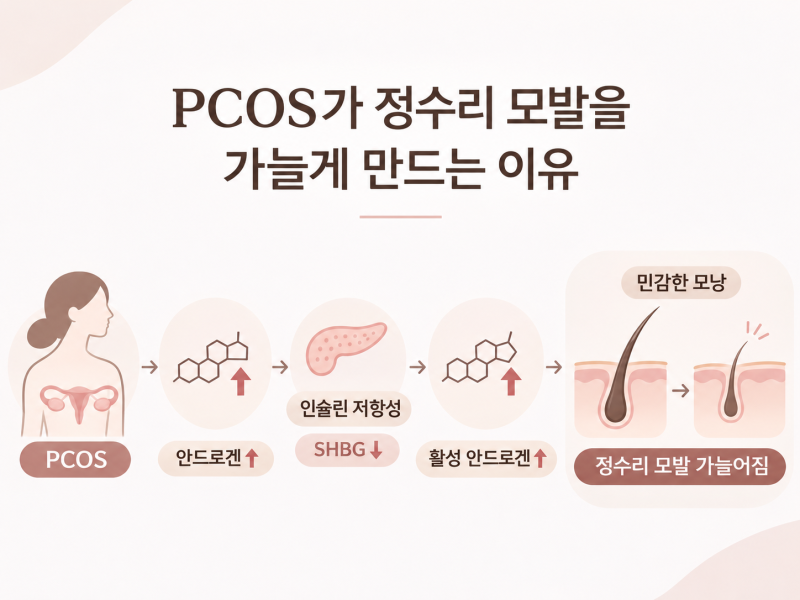
In PCOS, however, the production or activity of androgens may increase.
In particular, when insulin resistance is present, sex hormone-binding globulin (SHBG) levels can drop, which may raise the proportion of active androgens.
These changes can affect hair follicles that are genetically sensitive to androgens.
The gradual shrinking of hair follicles, which causes thick hairs to become thinner, is called “follicular miniaturization.”
In female pattern hair loss, the hairline at the front is often relatively preserved, while hair density decreases around the crown and along the part line.
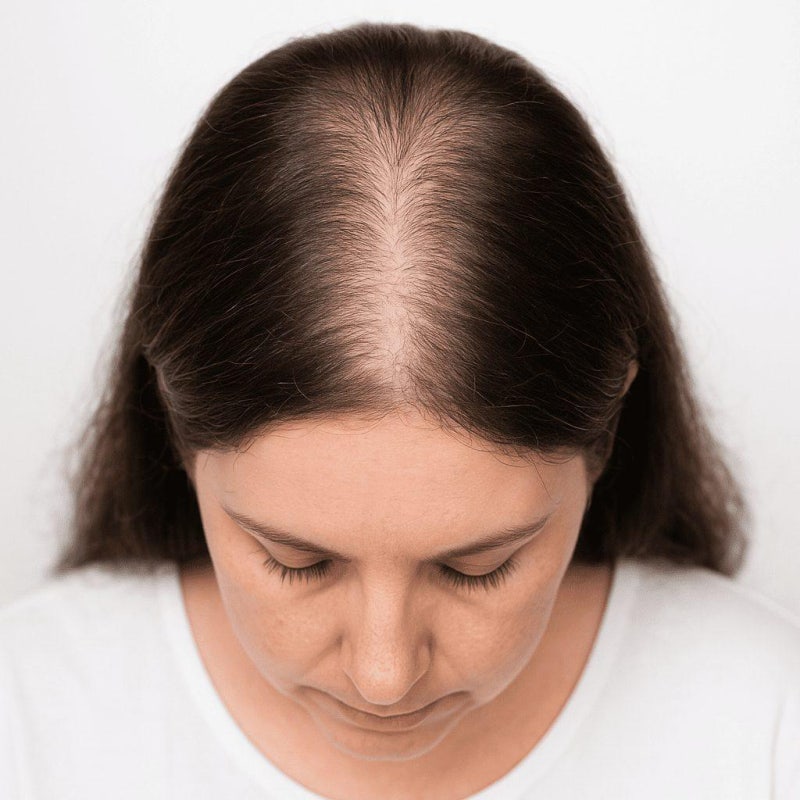
Some women also notice that their ponytail feels thinner than before.
2. Can hair loss occur even when hormone levels are normal?
Yes, it certainly can.
This is because female pattern hair loss depends not only on the level of androgens in the blood, but also on how sensitively the hair follicles respond to hormones.
Therefore, a normal result on a hormone test does not rule out female pattern hair loss.
Conversely, thinning at the crown alone is not enough to diagnose PCOS.
The 2023 International Evidence-based Guideline for PCOS also notes that when female pattern hair loss occurs on its own, the evidence that it predicts androgen excess is weak.
When I evaluate hair loss, I focus more on changes in hair thickness and density than on the number of hairs falling out.
Scalp photography and magnified examination can help determine whether follicular miniaturization is present. It is also important to review your history of menstrual cycles, acne, and excess hair growth (hirsutism).
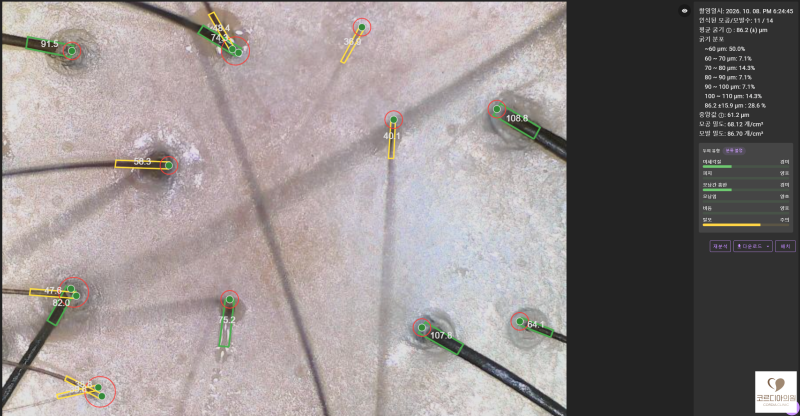
Scalp microscope analysis measuring each hair's thickness in µm; the panel lists an average of 86.2 µm and hair density per cm².
It is also important to check for conditions that can accompany hair loss, such as iron deficiency, thyroid disease, or telogen effluvium (temporary shedding triggered by the resting phase of the hair cycle).
If needed, a gynecologist or endocrinologist may consider additional hormone tests.
3. How is PCOS-related female hair loss treated?
First, I want to emphasize that PCOS and female pattern hair loss can be managed together.
For female pattern hair loss, topical minoxidil is the most common treatment.

Rogaine Extra Strength 5% minoxidil foam; the Korean label says use twice daily for men and once daily for women.
Minoxidil can help prolong the growth (anagen) phase of hair and improve hair thickness and density.
To properly evaluate its effect, consistent use for roughly 6 to 12 months is generally needed.
When signs of androgen excess are present, gynecologists may consider anti-androgen treatments such as combined oral contraceptives or spironolactone.
However, these medications must be weighed against pregnancy plans, underlying conditions, and side effects. In particular, if there is any possibility of pregnancy, effective contraception is essential when taking anti-androgens.
Lifestyle management can support the metabolic health of women with PCOS, but weight loss alone does not necessarily reverse hair loss.
Also, overly rapid dieting can trigger telogen effluvium, so caution is needed.
Closing Thoughts
If a woman with PCOS develops hair loss at the crown, it is important to assess both the influence of hormones and the condition of the hair follicles.
However, not all female pattern hair loss is caused by abnormal hormone levels.
“What matters more than any single hormone value is understanding the current state of your hair follicles.”
Especially if your hair is becoming progressively thinner, it is worth exploring whether treatment can help restore its thickness.
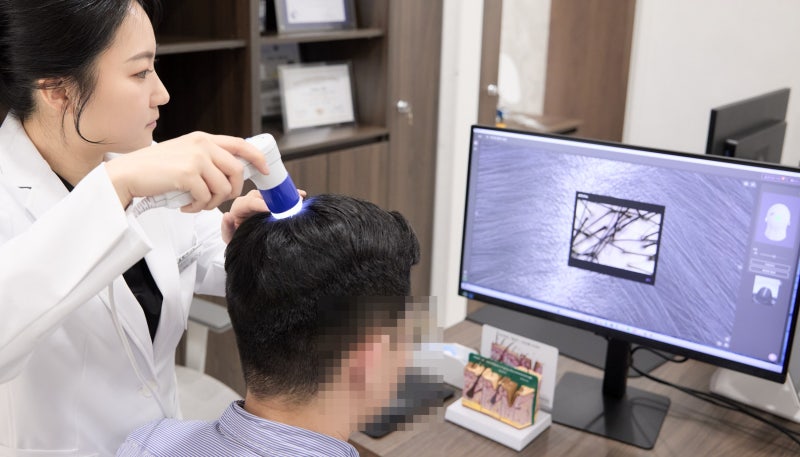
If hair loss progresses rapidly, or if your voice deepens or excess hair growth worsens, a prompt evaluation for other causes is also necessary.
That was Dr. Kim Da-jeong, Chief Director of Cordia Clinic.
Thank you.
〈Q&A〉 Frequently Asked Questions
Question | Answer |
Q. Will I definitely develop hair loss if I have PCOS? | No. There is individual variation depending on the influence of androgens and the sensitivity of your hair follicles. |
Q. If I treat PCOS, will my hair volume recover? | Managing hormonal imbalance can help, but female pattern hair loss may require separate hair-specific treatment. |
Q. I'm planning a pregnancy. Can I use minoxidil? | If you are pregnant or planning to become pregnant, avoid minoxidil and discuss safe treatment options with your healthcare provider. |
〈References〉
Teede HJ, et al. Recommendations From the 2023 International Evidence-based Guideline for the Assessment and Management of Polycystic Ovary Syndrome.
Diagnosis and management of polycystic ovarian syndrome. CMAJ. 2024.
American Academy of Dermatology. Thinning hair and hair loss: Could it be female pattern hair loss?
※ This article is intended to provide general medical information. Individual diagnosis and treatment vary depending on health status, pregnancy plans, and other factors.
〈Cordia Clinic Appointment Information〉
Cordia Clinic operates entirely by appointment to allow for sufficient consultation and individualized care. Please book by phone, KakaoTalk, or Naver before your visit.
〈Booking and Inquiries〉
Phone: 02-568-8575
Please reach out through whichever method is most convenient for you, including KakaoTalk or Naver booking.
〈Office Hours〉
Mon, Tue, Thu, Fri: 11:00 AM – 8:00 PM
Lunch break: 2:00 PM – 3:00 PM
Saturday: 10:00 AM – 4:00 PM
We see patients on Saturdays without a lunch break.
〈Directions〉
429 Seolleung-ro, Gangnam-gu, Seoul
6th Floor, KR Tower, Cordia Clinic
Exit 3 of Seolleung Station, the building with the Burger King
#PCOS #PCOSHairLoss #PolycysticOvarySyndrome #PolycysticOvarySyndromeHairLoss #PCOSSymptoms #FemalePatternHairLoss #WomenHairLoss #CrownHairLoss #PartingHairLoss #WomenHairLossCauses #WomenHairLossTreatment #HormonalHairLoss #AndrogenHairLoss #Androgens #Testosterone #DHT #FollicleMiniaturization #HairThickness #HairDensity #InsulinResistance #IrregularPeriods #AcneAndHairLoss #Hirsutism #Minoxidil #Spironolactone #EarlyHairLossSymptoms #HairLossTest #SeolleungHairLoss #YeoksamHairLoss