2026-09-19
Alopecia Areata: Hair Follicles Remain, but the Course Is Difficult to Predict
Alopecia areata spares hair follicles, but its course is unpredictable. Learn about evidence-based treatments from steroid injections to JAK inhibitors based on clinical guidelines and hair loss extent.
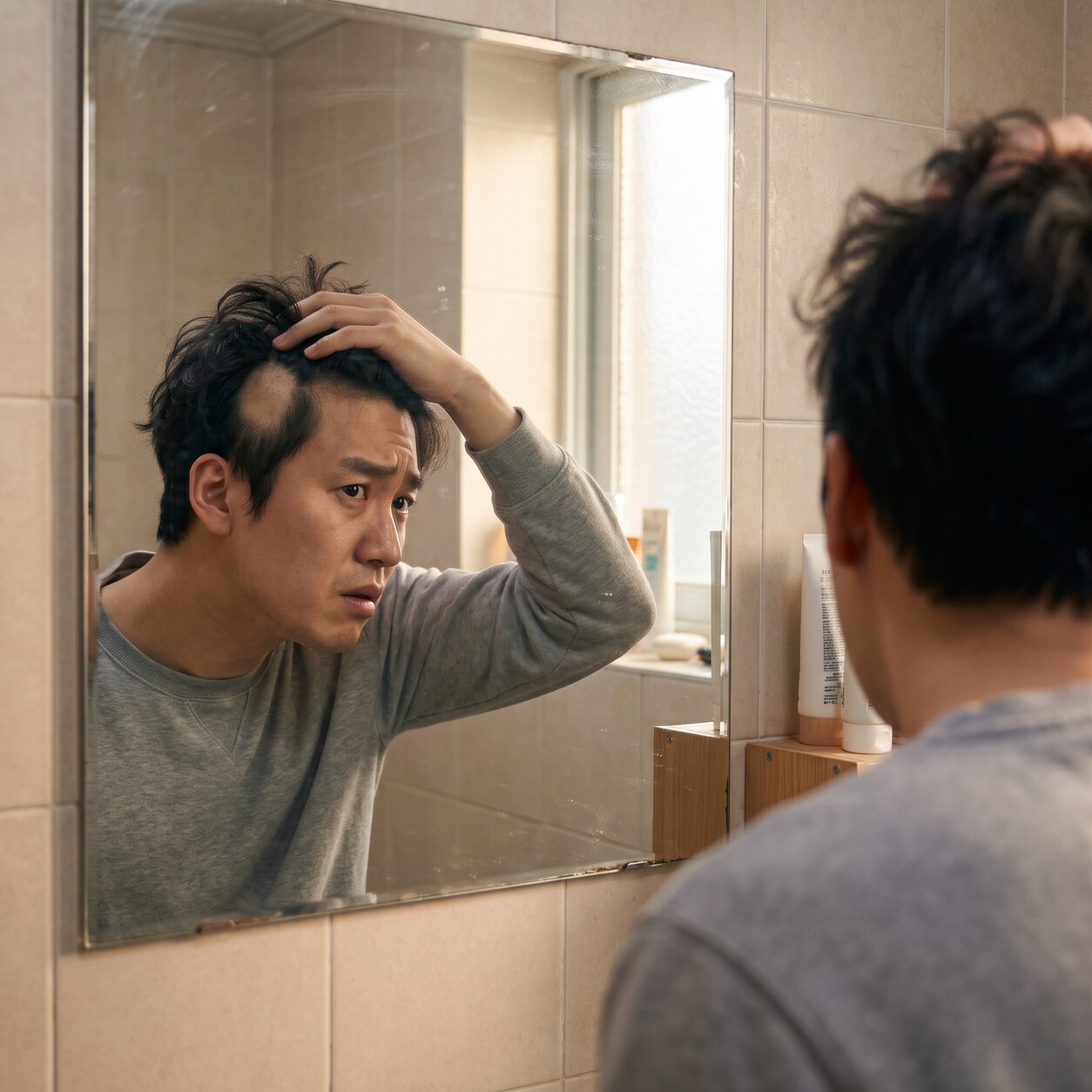
Here is a clear summary of why alopecia areata develops and which treatments are considered first depending on the extent of hair loss. This article does not promise a "complete cure."

The treatment approach is determined after examining the extent of hair loss and the condition of the scalp using magnified imaging. This is an informational image provided by the clinic.
What kind of condition is alopecia areata?
Alopecia areata (AA) is an autoimmune disorder. Cytotoxic T cells (immune cells) attack the hair follicles, leading to patchy hair loss in round patches. However, a key characteristic is that the hair follicles themselves are largely preserved, meaning there is potential for recovery. It is distinct from male or female pattern baldness.
When hair is lost across the entire scalp, it is called alopecia totalis; when hair across the entire body is lost, it is called alopecia universalis. According to the 2024 British Association of Dermatologists guidelines, hair loss covering 1–20% of the scalp is classified as mild, 21–49% as moderate, and 50% or more as severe.
Can it resolve on its own?
The clinical course is difficult to predict. In one follow-up study, a high proportion (68%) of individuals with mild initial loss involving less than 20% of the scalp later reported having no hair loss. However, a subset (19%) of those with under 50% involvement progressed to alopecia totalis or universalis. It may improve spontaneously or recur, and long-standing lesions often have lower rates of recovery.
When to seek medical evaluation
· When hair loss begins suddenly, expands rapidly, and shedding increases — this is a sign of active progression.
· When patches multiply, merge, or when eyebrows and eyelashes begin to shed
· When nail changes occur, or when there is insufficient response after more than 6 months of treatment
· When hair loss causes anxiety, depression, or interferes with daily life
Alopecia areata can lead to psychological burdens such as anxiety and depression, so consultations evaluate quality of life alongside scalp condition. This is an AI-generated image and not an actual patient.
Expected outcomes by extent of hair loss
Treatment is selected based on the extent of loss, age, and history of recurrence. For small areas, localized treatment is used; for extensive involvement, systemic medications affecting the whole body are considered.
Small lesions — Steroid injections or topical treatments
Injecting a corticosteroid (triamcinolone) directly into the patches of hair loss is one of the first-line options in clinical guidelines. In mild-to-moderate cases, it has been reported to yield higher regrowth rates compared to topical treatments. Guideline recommendations suggest starting at 5 mg/mL (adjusted within 2.5–10 mg/mL), administering approximately 0.1 mL per 1 cm² evenly across the patch and its margins at 6-to-12-week intervals. The actual concentration and intervals are determined during clinical consultation.
Commonly cited regrowth rates often come from older 1970s studies, which also documented cases of recurrence.
Topical corticosteroids are also a first-line treatment, often preferred for young children for whom injections are difficult, or for mild cases. Complete regrowth rates range from 20% to 61% across various studies, with recurrence rates after discontinuation reported between 38% and 63%.
Rapidly spreading patches — Oral corticosteroids (short-term)
When hair loss spreads rapidly or reaches moderate-to-severe levels, oral corticosteroids may be used for a brief period with a tapering schedule over several weeks, but they are not intended for long-term use.
Extensive lesions — Topical immunotherapy (DPCP, SADBE)
This treatment involves repeatedly applying chemicals to the scalp to deliberately induce a mild allergic contact dermatitis. Clinical guidelines recommend this for moderate-to-severe cases. In a pooled analysis of 45 studies (2,227 patients), any level of regrowth in patchy alopecia areata was 74.6%, while complete regrowth was 42.6%, with lower rates seen in alopecia totalis and universalis. Recurrences can occur, and because only a limited number of facilities perform this therapy, referral or co-management may be arranged if needed.
Over 50% of the scalp — Oral JAK inhibitors
These are oral medications that block inflammatory immune signaling. Guidelines recommend approved JAK inhibitors for severe alopecia areata affecting more than half of the scalp. In two Phase 3 clinical trials administering baricitinib 4 mg for 36 weeks, the proportion of patients achieving 20% or less scalp hair loss was 38.8% and 35.9%, compared to 6.2% and 3.3% in the placebo groups, respectively. Ritlecitinib is another agent approved in the United States for severe cases in individuals aged 12 and older.
Recurrence is common upon discontinuation, and because these medications act systemically, regular blood tests are required. If necessary, care is coordinated through specialist consultation.
PRP — Still in the investigational stage
PRP (platelet-rich plasma, an autologous blood-derived injection) remains under investigation. While a 2022 literature review analyzing 32 studies and 621 patients reported some positive outcomes, the authors noted that study quality was low and protocols were heterogeneous, making it difficult to recommend PRP as a standard treatment.
Key Takeaway: Alopecia areata has an unpredictable clinical course, and spontaneous recovery is possible. For this reason, definitive claims such as "cure" or "no recurrence" cannot be made. What matters is designing a personalized treatment plan—incorporating injections, topical medications, immunotherapy, or JAK inhibitors under specialist collaboration when needed—tailored to the extent of lesions, age, and history of recurrence.
Side Effects and Precautions During Treatment
The following reactions may occur during treatment:
· Steroid injections — Injection site pain, bleeding, skin atrophy (thinning or dimpling), pigmentary changes, folliculitis, or telangiectasia (visible capillaries). Prolonged or repeated use may rarely cause systemic side effects, which are monitored during visits.
· Topical steroids — Temporary burning sensation, skin thinning, hypopigmentation, and folliculitis. The risk increases with higher potency and prolonged use; in children, systemic absorption may rarely affect growth, so treatment duration is strictly managed.
· Oral steroids — Hair regrowth may not be maintained as the dose is tapered or discontinued.
· Topical immunotherapy — Deliberately induced allergic reactions are carefully monitored and managed during clinical appointments.
· JAK inhibitors — Acne, headache, upper respiratory infections, and shingles (herpes zoster) may occur. If laboratory abnormalities appear (elevated muscle enzymes, altered cholesterol, or blood cell counts), the medication may be paused or discontinued. Black-box warnings exist for serious infections such as tuberculosis, thrombosis, major cardiovascular events, malignancies, and mortality risk; therefore, these agents must be used with caution in patients over 65 or those with risk factors, and live vaccines must be avoided.
· PRP — Injection pain, burning, temporary redness, swelling, mild bleeding, and headache may occur. Long-term safety data are limited, and it is contraindicated in patients with coagulation disorders or active infections at the treatment site.
Frequently Asked Questions
Q. Will alopecia areata never recur after steroid injections?
It can recur. Clinical guidelines explicitly advise clinicians to inform patients that no treatment guarantees permanent success.
Q. Can children receive steroid injections?
For young children, topical medications are prioritized. In older children and adolescents, injections may be considered on a case-by-case basis for mild-to-moderate disease.
Q. Are the injections very painful?
Some patients find the discomfort significant enough to make continuing treatment difficult. Options such as topical numbing creams or cooling sprays are available, so please discuss this in advance during your consultation.
Q. Are PDRN injections effective for alopecia areata?
Reliable clinical studies establishing the efficacy of PDRN specifically for alopecia areata have not yet been demonstrated. As an unproven intervention, it should not replace the standard evidence-based treatments described above.
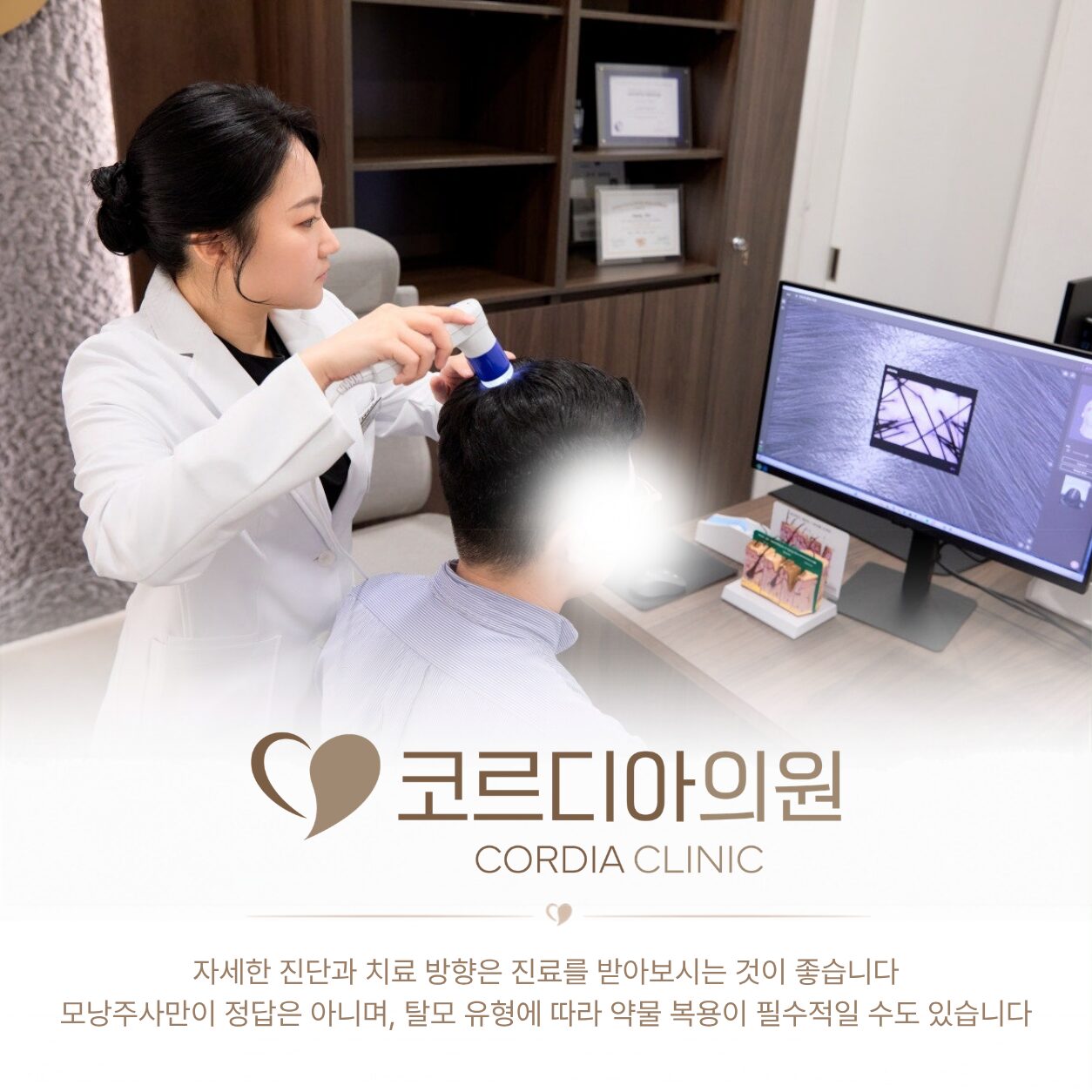
After assessing the condition via dermoscopy, initial treatment options are determined based on the extent of loss, age, and recurrence history. This is an informational image provided by the clinic and does not depict before-and-after treatment results.
Consultation & Appointment Information
Phone Consultation / Booking | 02-568-8575It is best to schedule a consultation when suddenly appearing bald patches begin to enlarge or increase in number. Cost details are provided during consultation. |
Clinic Hours | Mon, Tue, Thu, Fri 11:00 ~ 20:00 (Lunch 14:00 ~ 15:00) Saturday 10:00 ~ 16:00 Registration closes — Weekdays 19:00 · Saturday 15:00 Closed — Wednesdays, Sundays, and Public Holidays |
Directions | 6F, KR Tower, 429 Seolleung-ro, Gangnam-gu, Seoul (Yeoksam-dong)100m from Seolleung Station Exit 3 · 1-minute walk |
References
· Harries MJ, Ascott A, Asfour L, et al. British Association of Dermatologists living guideline for managing people with alopecia areata 2024. Br J Dermatol. 2025;192(2):190–205. (PMID 39432739)
· Olayinka JJT, Richmond JM. Immunopathogenesis of alopecia areata. Curr Res Immunol. 2021;2:7–11. (PMID 35492401)
· Gregoire S, McIntosh B, Sanchez K, Biba U, Mostaghimi A. Local Corticosteroids for Alopecia Areata: A Narrative Review. Dermatol Ther (Heidelb). 2025;15(7):1607–1631. (PMID 40323545)
· Lee S, Kim BJ, Lee YB, Lee WS. Hair Regrowth Outcomes of Contact Immunotherapy for Patients With Alopecia Areata: A Systematic Review and Meta-analysis. JAMA Dermatol. 2018;154(10):1145–1151. (PMID 30073292)
· King B, Ohyama M, Kwon O, et al; BRAVE-AA Investigators. Two Phase 3 Trials of Baricitinib for Alopecia Areata. N Engl J Med. 2022;386(18):1687–1699. (PMID 35334197)
· Blair HA. Ritlecitinib: First Approval. Drugs. 2023;83(14):1315–1321. (PMID 37556041)
· Tejapira K, Yongpisarn T, Sakpuwadol N, Suchonwanit P. Platelet-rich plasma in alopecia areata and primary cicatricial alopecias: A systematic review. Front Med (Lausanne). 2022;9:1058431. (PMID 36507528)
· Cruciani M, Masiello F, Pati I, Marano G, Pupella S, De Angelis V. Platelet-rich plasma for the treatment of alopecia: a systematic review and meta-analysis. Blood Transfus. 2023;21(1):24–36. (PMID 34967722)
Guideline reference (1) was cited from an excerpt; references 4 and 5 were cited based on abstracts. The numerical figures in this text reflect the specific conditions of each referenced study and do not predict individual patient outcomes. Injection concentrations and intervals mentioned follow general guideline recommendations and do not represent the proprietary protocol of Cordia Clinic. This article provides general medical information and is not a substitute for professional clinical consultation.
#AlopeciaAreata #AlopeciaAreataCauses #AlopeciaAreataTreatment #AutoimmuneHairLoss #SteroidInjections #TriamcinoloneInjection #TopicalImmunotherapy #DPCP #JAKInhibitors #Baricitinib #Ritlecitinib #AlopeciaRecurrence #AlopeciaTotalis #SeolleungHairLoss #GangnamHairLoss #CordiaClinic