2026-10-14
How Does Scalp Botox Work for Hair Loss? 3 Researched Mechanisms | Cordia Clinic Seolleung Station Hair Loss Treatment
Explains three proposed mechanisms of scalp Botox for hair loss, including muscle relaxation, TGF-β1 signaling, and neuro-inflammatory effects, and what the evidence shows.
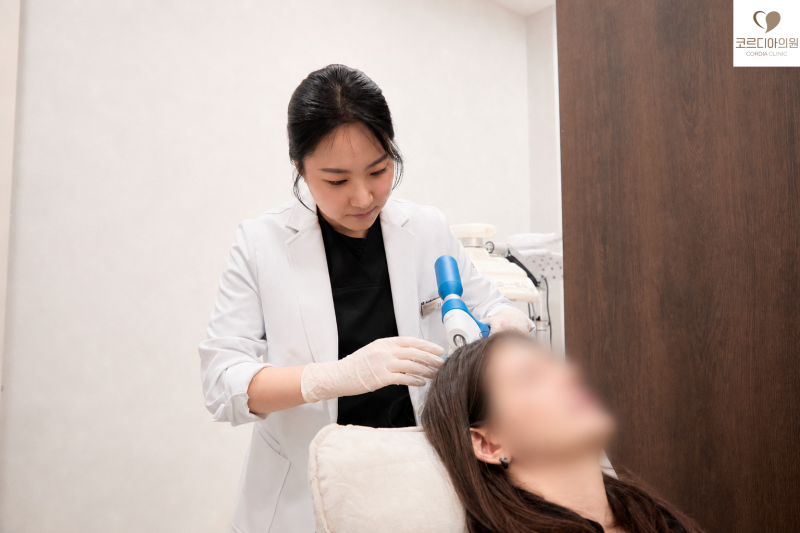
Hello. I am Dajeong Kim, Director of Cordia Clinic.
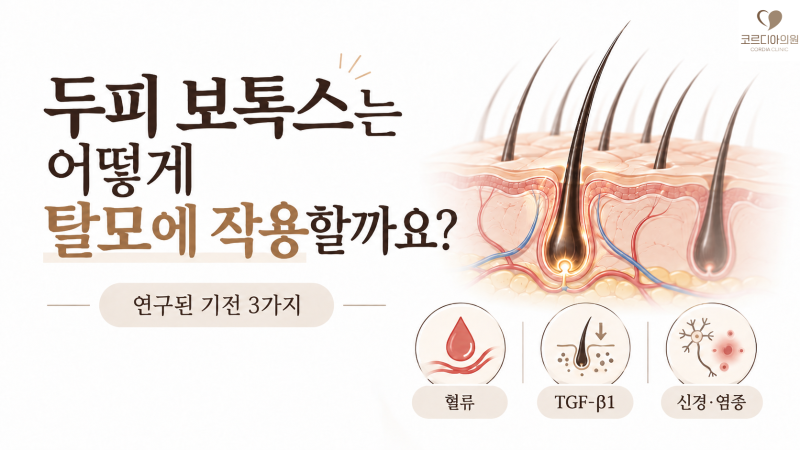
“Isn’t Botox a drug that stops muscles from moving?”
“So why do people say that injecting Botox into the scalp can help hair grow?”
“Does scalp Botox suppress male hormones like hair loss medications do?”
If you are interested in hair loss treatment, you have probably heard the term scalp Botox at least once.
Botulinum toxin is generally used to treat conditions such as expression wrinkles, muscle spasms, and excessive sweating.
However, in the field of hair loss, researchers are also studying whether botulinum toxin may affect hair growth.
At first, this may seem somewhat surprising.
How can a drug that relaxes muscles affect the hair follicles beneath the skin?
In fact, to answer this question, researchers are examining the muscles and blood flow of the scalp, the growth signals of hair follicle cells, and neurotransmitters and inflammatory responses.
To date, there are three representative proposed mechanisms of scalp Botox.
Relaxation of the muscles around the scalp and changes in microcirculation
Regulation of TGF-β1 growth-inhibiting signals in dermal papilla cells
Changes in neurotransmitters and inflammatory responses around hair follicles
However, not all three mechanisms have been proven in human scalp. Some have been observed in cell experiments, and others remain hypotheses proposed by researchers.
Today, to understand the principles of scalp Botox, we will first look at the process by which hair loss occurs, and then review the actual research findings and limitations of each mechanism.
1. To Understand How Scalp Botox Works, You First Need to Know About Follicular Miniaturization
One of the key changes in male-pattern and female-pattern hair loss is hair follicle miniaturization.
A hair follicle is the structure beneath the skin that produces hair.
A normal hair follicle produces hair by repeating phases of growth (anagen), regression (catagen), and rest (telogen).
However, as androgenetic alopecia progresses, the anagen phase of some follicles becomes shorter, and thinner, shorter hairs are gradually produced instead of thick, long ones.
This phenomenon is called hair follicle miniaturization.
In male-pattern hair loss, genetic predisposition and dihydrotestosterone (DHT) play key roles.
DHT is an androgen produced when testosterone is converted by 5α-reductase.
In genetically sensitive follicles, signaling by DHT and the androgen receptor can affect the hair growth cycle.
As a result, hair in the crown or frontal area may gradually become thinner.
Follicular miniaturization also occurs in female-pattern hair loss, but the influence of androgens varies among patients, and many have normal hormone levels.
So where in this process could botulinum toxin have an effect?
Current research is examining the possibility that it may indirectly affect the tissue environment and cell signaling surrounding the follicle, rather than directly inhibiting DHT production itself.
2. How Does Botulinum Toxin Work Originally?
Botulinum toxin is a protein-based neurotoxin derived from Clostridium botulinum.
In medicine, it is used in the form of a purified pharmaceutical product.
Its best-known action is inhibiting the release of acetylcholine from nerve endings.
Acetylcholine is a neurotransmitter that motor nerves use to send contraction signals to muscles.
Botulinum toxin type A acts on the SNARE protein complex at nerve endings, interfering with neurotransmitter release.
As a result, contraction of the affected muscle is temporarily reduced.
This mechanism is the basis for its use in wrinkle treatment and treatment of muscle spasms.
However, scalp Botox for hair loss does not study the muscle-relaxing effect alone.
Some studies are also examining whether it may affect cells around hair follicles, the nervous system, and inflammation-related signals.
There is an important distinction to make here.
The fact that botulinum toxin inhibits acetylcholine release is well established, but whether this action actually makes human hair grow has not yet been sufficiently established.
Scalp Botox Mechanism ①: Muscle Relaxation and Changes in Blood Flow
3. Does Relaxing the Scalp Muscles Increase Blood Flow to Hair Follicles?
One of the explanations for scalp Botox that has been proposed for a relatively long time is a hypothesis concerning scalp muscle tension and blood flow.
Our scalp is not simply made up of skin alone.
The scalp contains skin, subcutaneous tissue, the galea aponeurotica, various muscles, and blood vessels.
In particular, the frontalis, temporalis, and occipitalis muscles are distributed across the forehead, temporal area, and back of the head.
Some researchers have suggested that the contraction of these muscles and the tension of tissues may affect pressure in nearby blood vessels.
So what changes would occur if the contraction of nearby muscles were reduced with botulinum toxin?
The hypothesis proposed by researchers is as follows.
Reduced muscle contraction → changes in pressure in surrounding tissue → possible improvement in microcirculation → changes in the oxygen supply environment for hair follicles
Hair follicles are tissues that require a constant supply of energy and nutrients in order to produce hair.
Therefore, normal blood flow and oxygen supply are important for the physiological function of hair follicles.
However, there are points to be cautious about with this explanation.
Does improved blood flow necessarily mean hair loss will also improve?
Not necessarily.
Male-pattern hair loss is not a condition caused simply by poor blood circulation.
Various factors are involved, including genetic predisposition, androgen signaling, and follicular miniaturization.
In addition, even if reduced blood flow has been observed in areas where hair loss has progressed, it must be determined whether the reduced blood flow is the cause of hair loss or a result of decreased follicle size and metabolic demand.
Therefore, the link that relaxing scalp muscles increases blood flow and promotes hair growth has not yet been sufficiently proven.
At present, relaxation of scalp muscles and improved blood flow are representative hypotheses for how scalp Botox works, but they are not established mechanisms explaining its hair-growth effect.
4. Clinical Trial Examining the Scalp Muscle and Blood Flow Hypothesis
A 2024 study published in Dermatology and Therapy compared whether results differed depending on where scalp botulinum toxin was injected.
The researchers divided the scalp of patients with androgenetic alopecia into two sides.
On one side, botulinum toxin was injected intradermally in the area of hair loss, and on the other side, it was injected into the surrounding muscles.
A total of 29 participants completed the study.
After 12 weeks, hair density and thickness were compared using scalp dermoscopy.
The study found that hair density improvement was greater at sites injected intramuscularly than at sites injected intradermally.
These findings suggest that the mechanism related to muscle relaxation needs further study.
However, this study alone cannot confirm that muscle relaxation actually improved blood flow and induced hair growth.
This is because blood flow changes were not directly measured to prove a causal relationship with hair growth.
In addition, the study was small and the follow-up period was short.
In fact, another randomized clinical trial published afterward did not show a clear hair-growth effect with an approach that added intramuscular injection.
Therefore, the fact that hair changes were observed according to injection site should be distinguished from proof that the change was caused by increased blood flow.
5. Is It True That Scalp Botox Reduces DHT?
One explanation frequently introduced alongside the blood flow hypothesis is the claim that increased oxygen supply may alter DHT-related metabolism.
Some early studies suggested that the oxygen environment of the scalp might affect the metabolic pathway of testosterone.
Based on this, a hypothesis emerged that DHT production could decrease if oxygen supply improves.
However, it has not been sufficiently proven that DHT concentrations consistently decrease in the scalp of hair loss patients after botulinum toxin injection.
In particular, finasteride and dutasteride are drugs that reduce DHT production by inhibiting 5α-reductase.
On the other hand, there is no evidence that botulinum toxin inhibits DHT in the same way.
It is not accurate to understand scalp Botox as a hair loss drug that inhibits DHT like finasteride or dutasteride.
Scalp Botox Mechanism ②: Regulation of TGF-β1 Signaling in Dermal Papilla Cells
6. What Is the Relationship Between TGF-β1 and Hair Growth?
Among the scalp Botox mechanisms, the one for which direct results from cell experiments have been reported is the signaling related to TGF-β1.
First, it is necessary to understand dermal papilla cells.
Dermal papilla cells are located at the base of the hair follicle and transmit various signals that regulate the hair growth cycle.
Dermal papilla cells influence hair growth by interacting with the surrounding follicular epithelial cells.
In particular, in androgenetic alopecia, DHT is known to affect signaling in dermal papilla cells.
One substance being studied in this context is **TGF-β1(Transforming Growth Factor-beta 1)**.
TGF-β1 is a cytokine involved in cell proliferation, differentiation, and tissue remodeling.
Depending on the situation, TGF-β1 signaling in the follicle may be involved in inhibiting hair growth and in the transition into the catagen (regression) phase.
In particular, research has linked TGF-β1 signaling, increased by DHT, to the process by which growth of follicular epithelial cells is suppressed in androgenetic alopecia.
That said, this does not mean TGF-β1 is an inherently bad substance in the body.
This is because TGF-β family signaling also plays important roles in normal tissue repair and immune regulation.
The key point is in what situation and at what concentration it acts in a specific tissue.
7. 2003 Study: The Relationship Between DHT and TGF-β1
A 2003 study published in the FASEB Journal analyzed growth-regulating substances secreted by dermal papilla cells in androgenetic alopecia.
The study observed that dermal papilla cells exposed to androgens could increase their secretion of TGF-β1.
It was also suggested that this signal may be involved in suppressing the proliferation of surrounding follicular epithelial cells.
In particular, when an antibody that neutralizes the action of TGF-β1 was used, the cell proliferation inhibition was alleviated.
This provides evidence that TGF-β1 may be one of the important mediators in the process by which DHT affects hair growth.
However, these cell experiment results alone cannot fully explain the progression of hair loss in actual humans.
This is because other growth factors and signaling pathways are also involved in androgenetic alopecia.
8. 2020 Korean Study: Did Botox Reduce TGF-β1?
A 2020 study by a Korean research team was published in the Journal of the American Academy of Dermatology.
The paper title is as follows.
The effect of intradermal botulinum toxin on androgenetic alopecia and its possible mechanism.
This study is a useful reference when explaining the mechanism of scalp Botox.
The researchers administered intradermal botulinum toxin treatment to the scalp of 18 patients with androgenetic alopecia.
Changes in hair count were observed over 24 weeks.
As a result, the average hair count increased by about 5.1% compared with before treatment.
However, because this study had a small number of participants and lacked an appropriate placebo control group, it cannot be confirmed that the observed change was a direct effect of botulinum toxin.
What deserves more attention in the study is the experiment on dermal papilla cells.
The researchers observed that in cultured human dermal papilla cells, DHT increased TGF-β1 expression, and treatment with botulinum toxin decreased TGF-β1 expression.
These results show that botulinum toxin may affect growth-inhibiting signals around hair follicles.
However, there is also an important limitation here.
The fact that TGF-β1 decreased in cultured dermal papilla cells does not fully prove that the same change occurs in actual human scalp and that hair grows as a result.
Therefore, while regulation of TGF-β1 signaling currently has experimental grounds as a plausible mechanism, it has not been confirmed as a mechanism explaining clinical hair-growth effects.
9. If TGF-β1 Decreases, Do Hair Follicles Grow Back?
In androgenetic alopecia, follicular miniaturization is a complex process involving multiple signaling pathways.
Not only TGF-β1 but also signals such as Wnt/β-catenin are related to hair growth.
In fact, a study published in 2017 observed a trend in which Wnt-related signaling decreased and TGF-β-related signaling increased in the hair follicles of patients with androgenetic alopecia.
Additionally, in the laboratory, results showing that these signals influence each other were confirmed when they were regulated.
This shows that multiple signaling pathways are connected in hair follicle growth.
However, changing one signaling substance does not necessarily restore an already shrunken hair follicle to its normal size.
This is because many factors are involved in follicle growth, including genetic predisposition, the response of androgen receptors, and the surrounding tissue environment.
Therefore, even though botulinum toxin may affect TGF-β1, it should not be described as reversing follicular miniaturization in all patients with androgenetic alopecia.
Scalp Botox Mechanism ③: Neurotransmitters and Inflammatory Responses Around Hair Follicles
10. Are Nerves and Immune Cells Involved in Hair Follicles?
A hair follicle is not simply an independent structure that produces hair.
Blood vessels, nerves, and various immune cells are distributed around hair follicles.
These structures exchange signals with each other and can affect the physiological functions of hair and scalp.
In recent hair loss research, there is growing interest in the interaction between inflammatory responses around hair follicles and the nervous system.
In particular, neuropeptides secreted from nerve endings can be involved in symptoms such as skin inflammation, pain, and itching.
Representative substances are as follows.
Substance P
CGRP(Calcitonin Gene-Related Peptide)
These substances can affect not only pain and sensory transmission but also blood vessels and inflammatory responses in the skin.
However, Substance P and CGRP are also necessary for normal physiological functions, so decreasing them indefinitely is not necessarily beneficial for the skin or hair follicles.
11. Does Botulinum Toxin Affect Substance P and CGRP?
Botulinum toxin is well known for its action of inhibiting acetylcholine release.
In addition, some neuronal studies have reported that it can also affect the secretion of neuropeptides such as Substance P and CGRP.
These properties are used to explain how botulinum toxin may affect pain and neurogenic inflammation beyond muscle contraction.
So could similar changes occur around hair follicles?
Some researchers have proposed the hypothesis that excessive neurogenic inflammation may change the environment around hair follicles.
In particular, Substance P has been treated in some experimental studies as a substance that may affect the growth cycle and inflammatory responses of hair follicles.
However, these research results alone do not allow us to conclude that botulinum toxin treats androgenetic alopecia by inhibiting neurotransmitters.
Evidence on the extent to which Substance P and CGRP change in actual human scalp, and whether such changes have a direct causal relationship with hair growth, is limited.
Neurotransmitter regulation is an intriguing research hypothesis for scalp Botox, but it is the area where evidence linking it directly to hair-growth effects is particularly lacking among the three mechanisms.
12. The Possibility That Botox’s Anti-inflammatory Action Could Help Hair Loss
Botulinum toxin is being studied for its potential to affect some inflammatory signals in addition to neurotransmitters.
A 2025 review published in Toxins summarized the hair loss-related mechanisms of botulinum toxin.
This literature described the possibility that botulinum toxin may regulate inflammation-related cells and signals under certain experimental conditions.
For example, in animal studies, changes were observed in the activity of some inflammatory macrophages or in JAK/STAT-related signaling.
In addition, other skin disease studies have reported reduced infiltration of certain inflammatory cells.
These results show that the biological action of botulinum toxin may not be limited to muscle relaxation.
However, none of these experiments were conducted in patients with androgenetic alopecia.
Therefore, anti-inflammatory effects confirmed in other skin diseases or in animal studies cannot be directly interpreted as hair-growth effects in patients with hair loss.
Furthermore, androgenetic alopecia and alopecia areata differ in their mechanisms of onset.
In particular, alopecia areata is a disease in which autoimmune reactions are important, so the scalp Botox principles proposed for androgenetic alopecia cannot be applied in the same way.
13. Comparing the Three Researched Scalp Botox Mechanisms
Based on the studies published to date, the findings can be summarized as follows.
Mechanism Studied | Proposed Effect | Current Level of Evidence |
Scalp muscle relaxation and changes in blood flow | Possibility that reduced muscle tension alters pressure and blood flow in surrounding tissue | Physiological hypothesis and indirect clinical evidence; direct causal relationship not established |
Regulation of TGF-β1 signaling | Possible effect on growth-inhibiting signals in dermal papilla cells | Cell culture data exist; clinical significance in humans is uncertain |
Regulation of neural and inflammatory signaling | Possible effect on Substance P, CGRP, and certain inflammatory responses | Indirect hypothesis based on studies of other skin conditions and laboratory experiments |
All three mechanisms are worth studying.
In particular, research related to TGF-β1 is meaningful because experimental results have been reported using actual dermal papilla cells.
However, studies proposing possible mechanisms and clinical trials showing a treatment effect in patients are different levels of evidence.
The fact that multiple mechanisms of action for scalp Botox have been proposed does not mean that its actual hair-growth effect has been proven to the same extent.
14. If Scalp Botox Mechanisms Are Valid, Why Don’t All Clinical Trials Show an Effect?
This question is very important.
In medical research, a mechanism that is plausible in the laboratory may not produce the same effect in actual patients.
The reason is that the human body is far more complex.
First, cell experiments and the actual scalp environment are different.
Cultured cells cannot fully reproduce the blood vessels, nerves, immune cells, and tissue structure of the actual scalp.
Therefore, even if a specific signal decreases in the laboratory, the same result does not necessarily occur in the growth of human hair follicles.
Second, there are differences in injection methods.
Scalp botulinum toxin studies have used different approaches, including intramuscular, intradermal, and subcutaneous injections.
These differences can affect the site of action and distribution of the drug.
However, which injection method is most effective has not yet been established.
Third, the degree of hair loss progression differs.
In androgenetic alopecia, the degree of genetic predisposition and follicular miniaturization varies from patient to patient.
Therefore, even with the same treatment, it is difficult to expect that everyone will show the same response.
Fourth, study designs differ.
Some studies compared only hair counts before and after treatment.
However, to distinguish natural hair changes from treatment effects, an appropriate control group is necessary.
In particular, because hair loss treatment is evaluated over several months, differences in photography conditions, measurement locations, and hair growth cycles can all affect results.
For these reasons, randomized controlled trials of sufficient size are needed to confirm the encouraging early findings.
15. What Results Have Come From Actual Clinical Trials?
Having understood how scalp Botox works, it is also necessary to examine research on its actual hair-growth effect.
2024 Injection Site Comparison Trial
In a randomized bilateral scalp comparison trial completed by 29 participants, the intramuscularly injected sites showed more favorable changes in hair density than the intradermally injected sites.
However, this was a comparison of injection methods, and it is not a study that confirmed that botulinum toxin itself is more effective for hair growth than a placebo.
2025 Randomized Clinical Trial
A 2025 study published in Actas Dermo-Sifiliográficas compared two botulinum toxin injection methods in 15 men with androgenetic alopecia.
In one group, the toxin was injected both subcutaneously and intramuscularly, while in the other group, it was injected only subcutaneously.
After six months, hair density, thickness, and other parameters were evaluated.
The study found that neither group showed a significant improvement in hair density.
In addition, no significant difference was found between the two injection methods.
The researchers concluded that the study did not find results supporting botulinum toxin as a treatment for androgenetic alopecia.
Assessment in the 2025 Review
A 2025 review titled Botulinum toxin therapy for androgenetic alopecia: From mechanistic insights to clinical applications synthesized existing studies.
It noted that while early uncontrolled clinical studies reported positive results, more recent rigorous controlled studies did not consistently confirm improvement in hair density.
Therefore, the researchers concluded that botulinum toxin has not yet gathered sufficient evidence to replace existing hair loss treatments.
Scalp Botox has researched mechanisms of action, but the results of clinical trials confirming actual hair-growth effects are still inconsistent.
16. How Is It Different From Finasteride, Dutasteride, and Minoxidil?
When understanding the mechanisms of scalp Botox, comparing it with existing hair loss drugs makes the differences easier to see.
Finasteride and Dutasteride
These two drugs reduce DHT production by inhibiting 5α-reductase.
They directly affect an important pathophysiological basis of male-pattern hair loss, and their effectiveness has been confirmed through multiple clinical studies.
Minoxidil
Minoxidil is a drug that affects hair growth, and its various actions related to the anagen phase and follicular function have been studied.
Topical minoxidil is a treatment with relatively well-established evidence in both male-pattern and female-pattern hair loss.
Botulinum Toxin
In contrast, for botulinum toxin, several possibilities have been suggested, including muscle relaxation, signals from hair follicle cells, and neurogenic and inflammatory responses.
However, which mechanism is actually most important in hair loss treatment has not been established, and its clinical effectiveness also needs further verification.
Therefore, it cannot be said that botulinum toxin is more effective than existing hair loss drugs simply because it has more novel mechanisms.
The fact that a mechanism is complex or that there are several mechanisms does not indicate the size of the treatment effect.
17. Does the Injection Layer Matter for Scalp Botox?
Depending on the mechanism being studied, the target tissue may differ.
In studies focused on muscle relaxation, injections were given into the muscles around the scalp.
On the other hand, some studies that examined signaling changes in dermal papilla cells and tissue used intradermal injection.
The reason injection site and depth vary is that the mechanisms hypothesized in each study are different.
However, the most effective and safe injection depth, dose, and treatment interval for hair loss have not yet been standardized.
In addition, botulinum toxin products may not have identical potency units.
Therefore, the dose used in one study should not be applied as-is to a different product.
The injection depth of scalp Botox is an important variable in research, but injecting at a specific depth does not guarantee a hair-growth effect.
18. Side Effects and Precautions of Scalp Botox
Scalp botulinum toxin is administered by injection, so the effects of the drug itself must also be considered.
The following side effects may occur during the injection procedure.
Pain and bruising at the injection site
Local swelling
Headache or scalp discomfort
Infection
Hypersensitivity reaction
Unwanted weakening of nearby muscles
In particular, if botulinum toxin acts around the frontal area, it may affect the position of the eyebrows or eyelids.
In addition, although rare, the effects of botulinum toxin may spread beyond the injection site and cause symptoms such as generalized muscle weakness, difficulty swallowing, or difficulty breathing.
If these symptoms appear, immediate medical evaluation is necessary.
Botulinum toxin requires special caution in patients with certain neuromuscular diseases, and safety data for use during pregnancy and breastfeeding are limited.
Above all, it should be understood that the use of scalp botulinum toxin for hair loss treatment is generally off-label, meaning it is not an approved standard indication.
Therefore, when considering the procedure, both the expected benefits and the uncertainties and safety concerns should be evaluated together.
19. Frequently Asked Questions About the Principles of Scalp Botox
Q. Does scalp Botox improve blood circulation to make hair grow?
It has been suggested that relaxation of the muscles around the scalp may affect pressure in blood vessels and blood flow.
However, a direct causal relationship in which these changes induce hair growth in humans has not been sufficiently proven.
Q. Does scalp Botox suppress male hormones?
There is no evidence that it directly suppresses DHT production the way finasteride or dutasteride does.
The androgen-related effects of botulinum toxin are still at the research stage.
Q. If TGF-β1 decreases, will hair loss improve?
TGF-β1 is a signaling substance that may be involved in the process of suppressing hair growth in androgenetic alopecia.
There is a study showing that botulinum toxin reduced TGF-β1 expression in cultured dermal papilla cells, but this does not guarantee a hair-growth effect in humans.
Q. Is scalp Botox an injection that reduces inflammation?
Some anti-inflammatory and neurogenic inflammation-regulating effects of botulinum toxin are being studied.
However, it is not a drug that treats all inflammatory scalp conditions, and the anti-inflammatory mechanism for androgenetic alopecia has not been sufficiently established either.
Q. Can I stop taking hair loss medication if I get scalp Botox?
At present, the effectiveness of scalp Botox has not been established to the extent that it can replace existing hair loss medications.
It is advisable not to stop hair loss medication you are currently taking on your own.
Q. Is scalp Botox effective for both male-pattern and female-pattern hair loss?
There is relatively more research on male-pattern hair loss, while data on female-pattern hair loss are limited.
In either case, a consistent effect cannot be guaranteed for every patient.
Q. Does scalp Botox work on alopecia areata through the same principle?
Alopecia areata is an autoimmune disease and differs in its mechanism of onset from androgenetic alopecia.
Therefore, the mechanisms studied in androgenetic alopecia cannot be applied directly to alopecia areata.
The therapeutic effect of botulinum toxin in alopecia areata has also not been sufficiently established.
Closing Remarks
How does scalp Botox work against hair loss?
To date, the researched principles of scalp Botox fall into three main categories.
The first is the possibility of affecting blood flow and oxygen supply by relaxing the muscles around the scalp.
The second is the possibility of regulating growth-inhibiting signals such as TGF-β1 in dermal papilla cells.
The third is the possibility of affecting neurotransmitters such as Substance P and CGRP, as well as inflammatory responses around hair follicles.
Among these, the TGF-β1 mechanism has reported results from studies using cultured dermal papilla cells.
On the other hand, whether improved blood flow through scalp muscle relaxation or regulation of neurogenic inflammation actually leads to hair growth has not yet been sufficiently proven.
Moreover, recently published clinical studies have reported both positive results and results that failed to confirm an effect.
Therefore, while scalp Botox is a treatment whose many mechanisms of action are being studied, it is difficult to describe it as a standard treatment with an established effect on hair loss and an optimal injection method.
When understanding hair loss treatment, what matters is not simply looking at the potential of a new drug or procedure.
It is important to examine how far its action has been verified and how consistently the effect has been confirmed in actual patients.
Research on scalp Botox for hair loss may continue to advance, but for now, it is necessary to understand it separately from existing hair loss medications, with a clear view of the evidence and its limitations.
References and Medical Evidence
1. Research on the TGF-β1 Mechanism of Scalp Botox
Shon U, Kim MH, Lee DY, Kim SH, Park BC. The effect of intradermal botulinum toxin on androgenetic alopecia and its possible mechanism. Journal of the American Academy of Dermatology. 2020;83(6):1838–1839.
DOI: 10.1016/j.jaad.2020.04.082
2. Relationship Between Androgens and TGF-β1
Inui S, Fukuzato Y, Nakajima T, Yoshikawa K, Itami S. Identification of androgen-inducible TGF-beta1 derived from dermal papilla cells as a key mediator in androgenetic alopecia. FASEB Journal. 2003;17(15):2319–2321.
3. Comparison of Intramuscular and Intradermal Injection Trials
Li J, et al. Intradermal Injection in Balding Region Versus Intramuscular Injection in Surrounding Muscles: A Split-Scalp, Randomized Trial on BoNT for Androgenetic Alopecia. Dermatology and Therapy. 2024.
DOI: 10.1007/s13555-024-01189-x
4. 2025 Randomized Clinical Trial
Lima-Galindo AA, et al. Subcutaneous Versus Combined Subcutaneous and Intramuscular Botulinum Toxin for Androgenetic Alopecia: A Randomized Clinical Trial. Actas Dermo-Sifiliográficas. 2025;116(9):959–966.
DOI: 10.1016/j.ad.2025.01.012
5. Review of Neurological and Inflammatory Mechanisms of Scalp Botox
Botulinum Toxin in the Treatment of Hair and Scalp Disorders: Current Evidence and Clinical Applications. Toxins. 2025;17(4):163.
6. Evidence Review of Scalp Botox for Hair Loss Treatment
Botulinum toxin therapy for androgenetic alopecia: From mechanistic insights to clinical applications. Chinese Journal of Plastic and Reconstructive Surgery. 2025;7(3):173–178.
DOI: 10.1016/j.cjprs.2025.08.006
7. Systematic Review of Early Studies
Use of Botulinum Toxin for Androgenic Alopecia: A Systematic Review. Skin Appendage Disorders. 2022;8(2):93–100.
※ This article is intended to provide general medical information on the hair loss-related mechanisms of action and clinical evidence of scalp botulinum toxin.
※ In Korea, using botulinum toxin for hair loss treatment is off-label, as it differs from the indications generally approved in the country. The mechanisms studied do not guarantee actual hair-growth effects or safety.
※ Actual hair loss treatment should be tailored to the type of condition, such as male-pattern or female-pattern hair loss, alopecia areata, or telogen effluvium, and to the patient’s health status.
〈Cordia Clinic Appointment Information〉
Cordia Clinic operates entirely by appointment to provide thorough consultations and individualized care. Please make an appointment by phone, KakaoTalk, or Naver before your visit.
〈Appointments and Inquiries〉
Phone: 02-568-8575
Please contact us through whichever method is most convenient for you, such as KakaoTalk or Naver booking.
〈Hours〉
Mon, Tue, Thu, Fri: 11:00 AM – 8:00 PM
Lunch break: 2:00 PM – 3:00 PM
Saturday: 10:00 AM – 4:00 PM
Saturday hours run without a lunch break.
〈Directions〉
429 Seolleung-ro, Gangnam-gu, Seoul
6th Floor, KR Tower, Cordia Clinic
Exit 3, Seolleung Station, Burger King Building