2026-11-11
Why Hair Sheds 2–3 Months After Dieting in Yeoksam-dong: Telogen Effluvium and Recovery Timeline
Hair shedding 2–3 months after rapid weight loss is often telogen effluvium. It usually recovers once the cause resolves, so nutrition and pace of weight loss matter most.
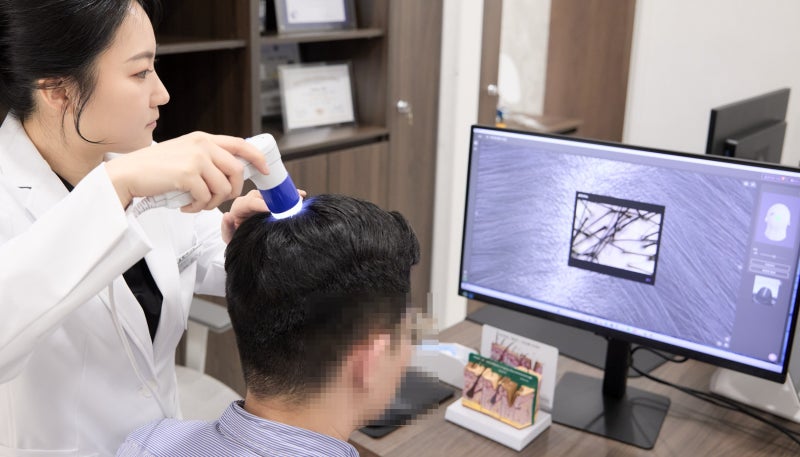
Hello, I'm Dajeong Kim, director physician at Cordia Clinic.
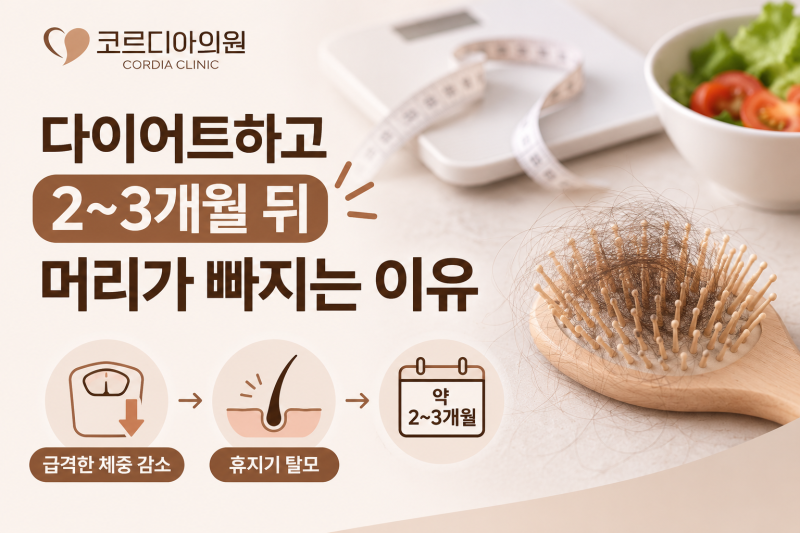
Have you ever been alarmed after successfully losing weight on a diet, only to find your hair suddenly falling out in large amounts?
In particular, some people notice that about 2–3 months after starting a diet, they lose noticeably more hair than usual when washing or drying it.
This phenomenon may be related to "telogen effluvium," a type of hair loss caused by rapid weight loss and insufficient nutrient intake.
Fortunately, telogen effluvium is a type of hair loss in which new hair is likely to grow back once the underlying cause improves.
Today, we'll look at why hair loss occurs after dieting, when it recovers, and how to manage it.
1. Why does hair loss after dieting occur 2–3 months later?
Hair goes through a repeating cycle of growth (anagen), regression (catagen), and resting (telogen) phases.
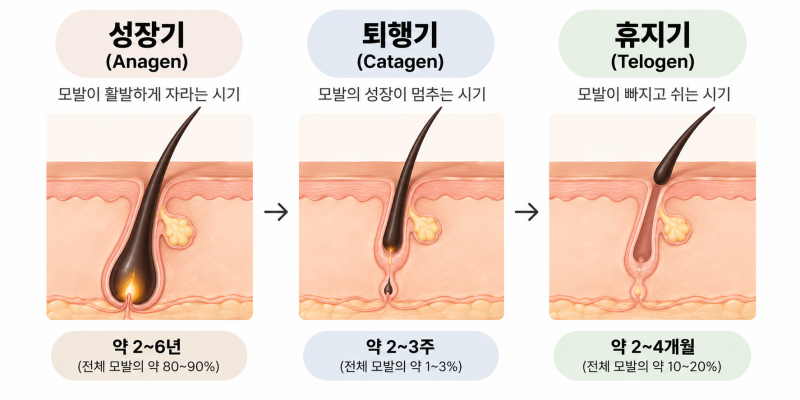
Even on a healthy scalp, most hairs are in the growth phase, while some hairs enter the resting phase and naturally shed.
However, rapid weight loss or extreme food restriction can act as a physiological stress on the body.
During this process, some follicles that were in the growth phase enter the resting phase faster than usual.
The important point is that hairs that have entered the resting phase do not fall out right away.
Because the resting phase typically lasts about 2–3 months, shedding only increases 2–3 months after the body undergoes changes from dieting.
A 2025 patient information leaflet from the British Association of Dermatologists (BAD) also identifies rapid weight loss and extreme dieting as major triggers of telogen effluvium.
2. Can protein and nutrient deficiency also be a cause?
The main component of hair is a protein called keratin.
The body breaks down protein from food into amino acids and uses them to build new hair.
In particular, the matrix cells of the hair follicle proliferate actively, so they require a steady supply of nutrients.

A spread of eggs, salmon, cottage cheese, lentils, spinach, nuts and yogurt.
However, if you cut back on food too much, you may become deficient not only in protein but also in nutrients needed for hair growth, such as iron and zinc.
Also, even when no specific nutrient deficiency is detected, rapid weight loss itself can affect the hair growth cycle.
Therefore, if you experience hair loss after dieting, it is important to first check your recent food intake and rate of weight loss, rather than simply starting hair loss treatment.
3. Will the hair that fell out after dieting grow back?
Telogen effluvium is generally not hair loss in which the follicles are permanently destroyed.
Therefore, new hair is likely to grow once the cause is resolved.
According to the American Academy of Dermatology (AAD), excessive hair shedding caused by physical stress gradually decreases as the cause resolves, and it may take about 6–9 months or longer for hair volume to recover.
However, if you continue dieting and remain in a state of insufficient nutrient intake, hair loss may persist for a long time.
Also, if you already had male- or female-pattern hair loss, telogen effluvium may overlap with it and make your hair look thinner.
4. How should hair loss after dieting be managed?
The most important things are adequate nutrition and controlling the rate of weight loss.
In particular, avoid restricting protein and calories excessively, and aim for a balanced intake of various nutrients, including iron and zinc.
If your food intake is insufficient, your nutritional status can be assessed and appropriate supplementation can be considered.
However, IV nutrition alone does not directly treat telogen effluvium, and if you are able to eat, oral nutritional supplementation takes priority.
In hair loss consultations, I place importance on checking weight changes and food intake over the past three months.
It is also necessary to evaluate, through scalp imaging and observation of hair shaft thickness, whether this is simple telogen effluvium or whether existing pattern hair loss is also present.
5. When you should see a doctor
Even if you think it's hair loss after dieting, not all hair loss is caused by nutritional deficiency.
In particular, if shedding continues to increase for more than 6 months, or if hair along the part line and crown gradually becomes thinner, other hair loss conditions should be checked.
Medical evaluation is also needed if there is scalp pain, redness, or localized patchy hair loss.
Depending on the situation, additional tests such as iron stores or thyroid function may be considered.
6. Frequently asked questions
Q. If I stop dieting, will my hair grow back right away?
Even after the cause is resolved, it takes time for the hair growth cycle to normalize. Generally, shedding decreases and new hair begins to grow over a period of several months.
Q. Will my hair recover faster if I eat a lot of protein?
If you were lacking protein, appropriate supplementation can help with recovery. However, there is not enough evidence that eating more than you need makes hair grow faster.
Q. Does the same thing happen if I lose weight with Wegovy or Mounjaro?
Yes. Even while using anti-obesity medications, telogen effluvium can occur due to rapid weight loss and insufficient food intake. However, the possible effects of the drugs themselves are also being studied, so the cause should not be determined definitively.
7. Don't be too worried about hair loss after dieting
Telogen effluvium that occurs after rapid weight loss is a type of hair loss that is likely to recover once the cause is resolved.
However, if hair loss persists, it is better to check your nutritional status and changes in the follicles rather than simply waiting.
A healthy diet is not just about losing weight, but also about keeping the body's tissues, including muscle and hair, healthy.
References
British Association of Dermatologists. Telogen Effluvium – Patient Information Leaflet. 2025.
American Academy of Dermatology. Do you have hair loss or hair shedding?
Bergfeld WF, Mendez D. Shedding: An Updated Guide to a Common Cause of Hair Loss. Cleveland Clinic Journal of Medicine. 2026.
Telogen Effluvium Associated With Weight Loss: A Single Center Retrospective Study. 2024.
※ This article is written for general medical information purposes only. Actual causes of hair loss and recovery timelines may vary depending on individual health status.
〈Cordia Clinic Appointment Information〉
Cordia Clinic operates by appointment only (100%) to allow for thorough consultations and individualized care. Please make an appointment by phone, KakaoTalk, or Naver before your visit.
〈Booking and Inquiries〉
Phone: 02-568-8575
Please contact us through your preferred method, such as KakaoTalk or Naver booking.
〈Hours〉
Mon, Tue, Thu, Fri: 11:00 AM – 8:00 PM
Lunch break: 2:00 PM – 3:00 PM
Saturday: 10:00 AM – 4:00 PM
We see patients on Saturdays without a lunch break.
〈Directions〉
429 Seolleung-ro, Gangnam-gu, Seoul
6th Floor, KR Tower, Cordia Clinic
Exit 3, Seolleung Station, Burger King building
#HairLossAfterDieting #DietHairLoss #DietHairLossTiming #DietHairLossRecovery #TelogenEffluvium #TelogenEffluviumCauses #TelogenEffluviumTreatment #TelogenEffluviumRecovery #RapidWeightLoss #WeightLossHairLoss #HairLossAfterWeightLoss #ExcessiveHairShedding #HairLossCauses #EarlySignsOfHairLoss #NutritionalHairLoss #ProteinDeficiencyHairLoss #IronDeficiencyHairLoss #ZincDeficiency #HairGrowthCycle #HairGrowth #FollicleHealth #CrownHairLoss #WomensHairLoss #MensHairLoss #WegovyHairLoss #MounjaroHairLoss #HairLossNutrition #SeolleungHairLoss #YeoksamHairLoss #CordiaClinic