2026-10-17
Women's Hair Loss in Seoul: What to Check Before Writing It Off as 'Just Aging'
Thinning hair during menopause is common, but it isn't always just aging. This guide covers why hair thins, its typical pattern, causes that can be corrected, and treatment options.
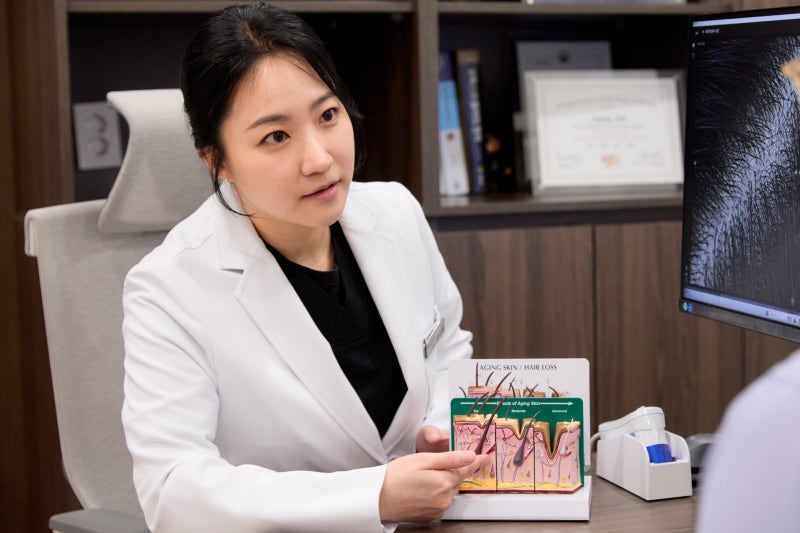
Hello.
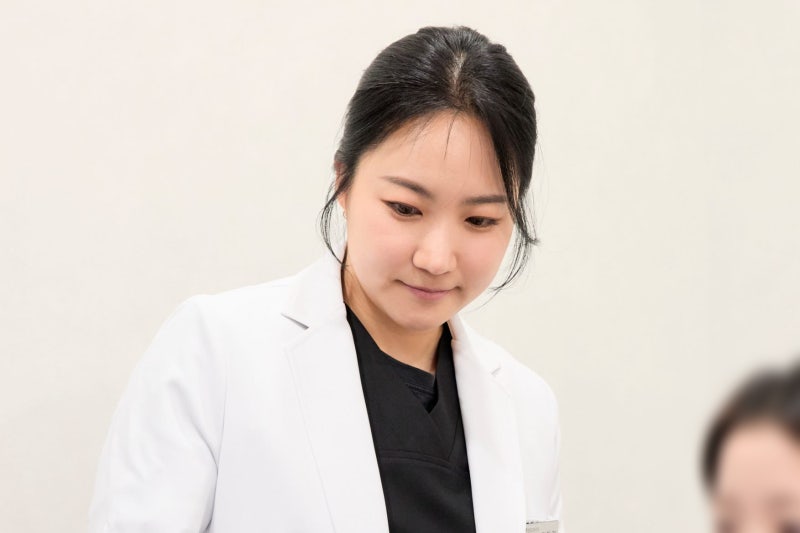
I'm Dr. Kim Dajeong, Director of Cordia Clinic.
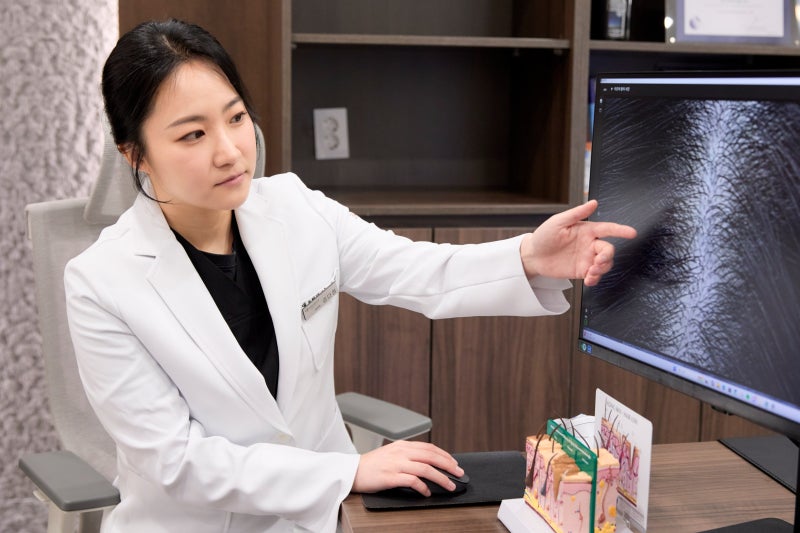
[Premium Hair Loss Treatment] Dr. Kim Dajeong, Director, Cordia Clinic | ||
<1:1 Customized Diagnosis> Based on tens of thousands of clinical data points, Precise focus and surgical skill honed through surgical training | ||
Accurate analysis powered by 3D AFS precision diagnostics <Precision Diagnostic System> | ||
Sustainable hair loss treatment built on a low-pain system <Pain Management Know-How> |
Do you find more hair than usual tangling around your fingers after washing your hair?
No matter how you shift your part, your scalp may look more visible than it used to.
'Is everyone my age going through this...?'
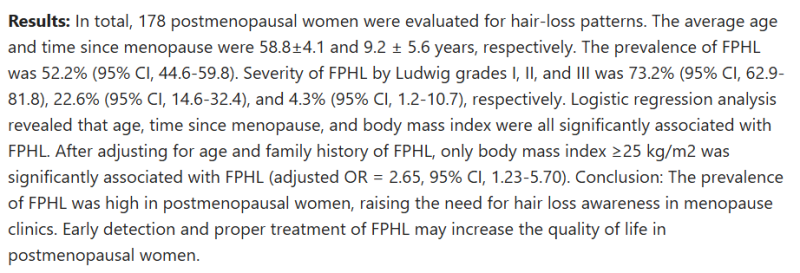
Study excerpt: of 178 postmenopausal women, 52.2% had female pattern hair loss; a BMI of 25 or higher was significantly associated.
Many women in their 50s or so accept thinning hair as a natural part of aging.
And indeed, it is a very common change.
Worldwide, roughly 1.1 billion women are living in the postmenopausal stage, and one study found female pattern hair loss in more than half of postmenopausal women.
But being common and being fine to simply leave alone are two different things.
Today, I'll walk you through three things: why hair thins during menopause, what form it takes, and what you can do about it now.
These are also the questions I hear most often in my women's hair loss clinic in Seoul.
<Clinical Philosophy>
Why does hair become thinner during menopause?
Let's start with estrogen.
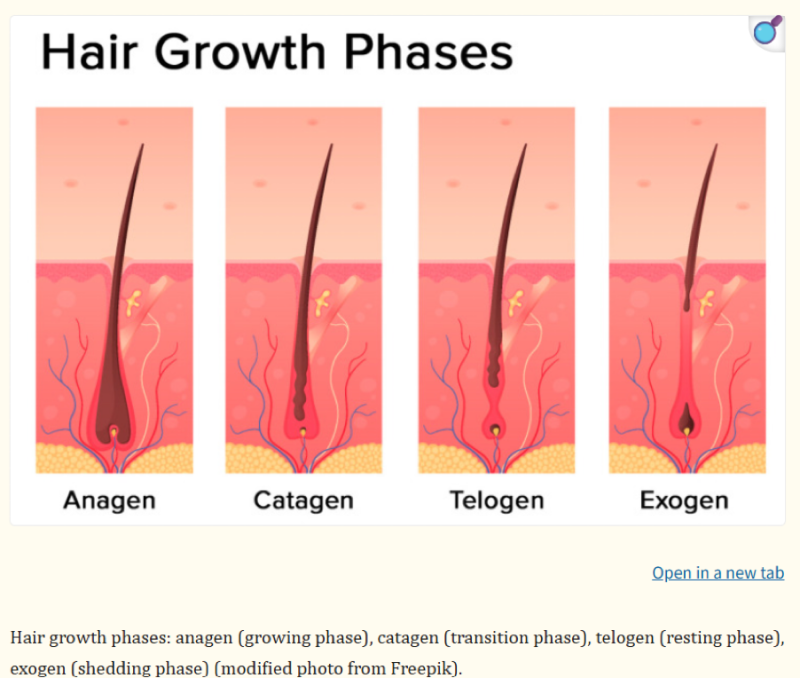
Diagram of the four hair growth phases: anagen (growing), catagen (transition), telogen (resting) and exogen (shedding).
Hair goes through a growth phase (anagen) and a resting phase (telogen) before it sheds.
Estrogen helps extend the growth phase.
The same principle explains why hair looks fuller during pregnancy and then sheds heavily after childbirth.
As estrogen declines around menopause, the growth phase shortens and follicles spend longer resting.
On top of that, one more factor comes into play.
Women's bodies naturally contain a small amount of androgens (male hormones), and their relative influence becomes stronger.
Follicles that respond to androgens gradually shrink, and the hairs they produce become finer and shorter over time.
Oxidative stress, which increases with age, is also considered a factor that wears down the follicular environment.
That's why these changes often begin gradually in the late 40s, when menstrual cycles become irregular, rather than appearing suddenly after menopause.
That's why so many women say, "I'm not sure when it started."
Thinning of the remaining hair often comes before increased shedding.
Knowing this order can help you avoid putting off a consultation for women's hair loss in Seoul with the thought, "I'm not losing that much yet."
Is it because of age, or is there another cause?
Menopausal hair changes follow a characteristic pattern.
The hairline at the front stays relatively intact, while volume decreases over a wide area centered on the crown and part line.
The front of the part may also widen, creating a "Christmas tree" shape.
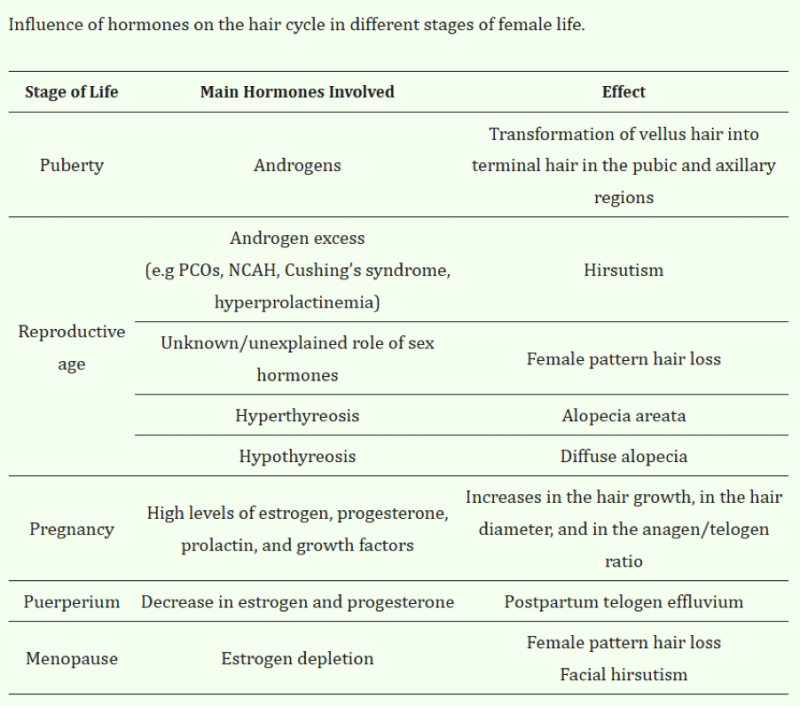
Table: how hormones affect hair at each life stage, from puberty and pregnancy to postpartum shedding and menopausal hair loss.
However, other causes often overlap during the same period more than you might expect.
Thyroid function changes, iron deficiency, rapid weight changes, and newly started medications can all push a large number of hairs into the resting phase at once.
This type of telogen effluvium can improve once the underlying cause is corrected, but if it's dismissed as "just menopause," that opportunity is lost.
From our perspective, this is the part we find most unfortunate.
Some women spend one to two years attributing problems that could be identified with a few blood tests to aging.
That's why at the first visit, I check hair thickness and density by area using 3D AFS, and if needed, we run blood tests such as thyroid function and ferritin (iron stores).
The starting point for treatment depends on the cause.
That's why diagnosis comes first in our women's hair loss care in Seoul.
Once diagnosis is complete, treatment begins with a combination tailored to each patient and each area.
Minoxidil is at the core.
Topical minoxidil applied to the scalp is the standard. For those who find application cumbersome or experience scalp irritation, low-dose oral minoxidil may be considered after an individual consultation.
Minoxidil works by prolonging the growth phase and helping thinned hair grow back thicker.
Keep in mind that you need to use it consistently for at least 4 to 6 months to judge its effect, and shedding may temporarily increase during the first few weeks.
Oral formulations can cause side effects such as increased facial hair or swelling in the hands and feet, so we monitor patients regularly.
As adjunctive treatments, we use LLLT (low-level laser therapy) and follicle injections.
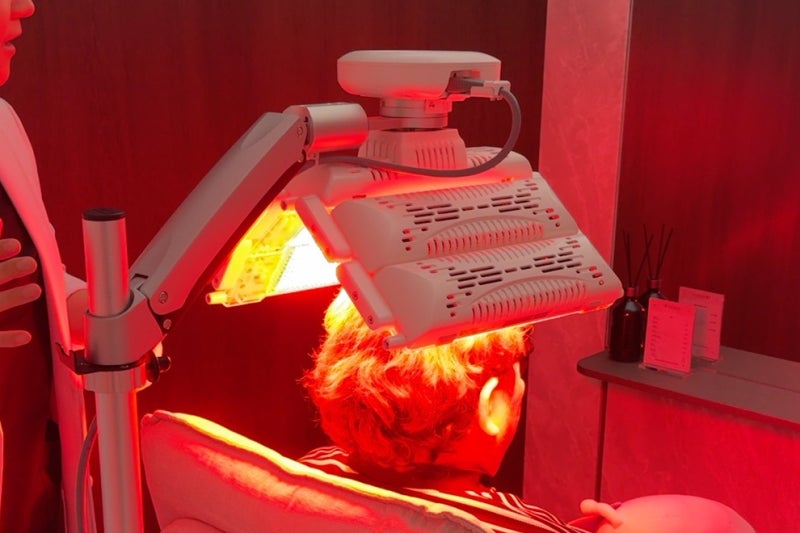
LLLT uses light energy to stimulate metabolism in follicle cells, while follicle injections deliver ingredients such as PDRN and growth factors directly to the area around the follicles, bypassing the stratum corneum.
For those who respond slowly to medication alone, we build a plan that combines these approaches.
The goal with menopausal hair changes is less about reversing them and more about slowing them down and protecting what you have.
That's also why I recommend planning women's hair loss treatment in Seoul with a long-term view.
Thinning hair during menopause is common.
But being common doesn't mean you should just sit back and watch.
If another issue overlaps during this time, recovery is possible. And even female pattern hair loss triggered by hormonal changes allows you to keep more hair the earlier you start.
When your body changes, your hair changes along with it.
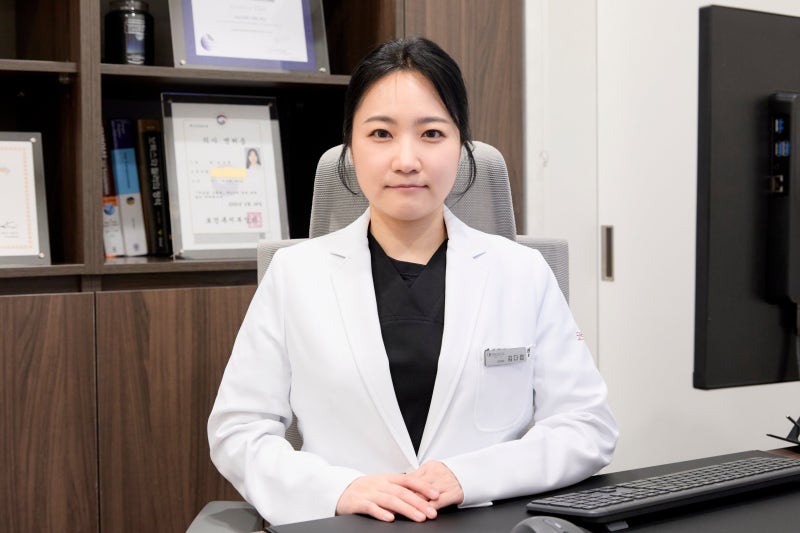
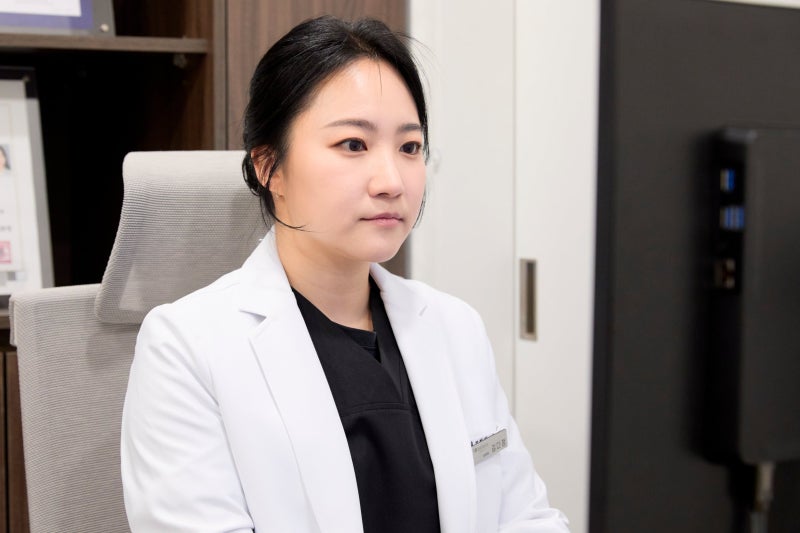
Portrait of a doctor seated at her desk, with framed certificates on the shelf behind her.
Rather than enduring these changes alone, I hope you'll take a moment to see where your scalp stands right now.
This has been Dr. Kim Dajeong, Director of Cordia Clinic, sharing insights on women's hair loss concerns in Seoul.
Thank you.
<Frequently Asked Questions>
Question | Answer |
Q. Do I really need to complete all 12 injection sessions? | You may wonder whether you can stop once you see results from around the 5th or 6th session. However, newly grown hair is still in the process of thickening. To properly assess progress, we recommend continuing treatment through the 12th session. After that, depending on your condition, maintenance treatment can be continued at longer intervals. |
Q. Are there any side effects of the injection treatment? | You may experience pain at the injection site or headaches, and these are mostly temporary. Rarely, bruising or a heavy feeling in the eyebrows may occur. If discomfort persists, please contact the clinic. |
Q. Can I get a perm or hair coloring? | Yes, but to minimize scalp irritation, we recommend avoiding them for one week after injection treatment and spacing perms and coloring about two months apart. Please also take care to soothe your scalp after treatments. |
< Related Articles You May Find Helpful >
<Inquiries - Naver Talk>
<Cordia Clinic Notice> | ||
To provide thorough consultations and personalized care to every patient, Cordia Clinic operates on a 100% appointment-only basis. To maintain the quality of care and a private clinical environment, we accept a limited number of appointments. Please understand that booking your preferred schedule may be difficult. We will repay your trust with accurate diagnosis and devoted care. Thank you. |
<Clinic Hours> | ||
Mon · Tue · Thu · Fri: 11:00 – 20:00 (Lunch break: 14:00 – 15:00) Saturday: 10:00 – 16:00 (Open without a lunch break) | ||
6th Floor, KR Tower, 429 Seolleung-ro, Gangnam-gu, Seoul (Exit 3, Seolleung Station) | ||
02-568-8575 |